Trump’s push for US dominance across the Western Hemisphere, notably Greenland, Canada, and the Caribbean, creates challenges for European and NATO allies amid the Ukraine and Iran wars.
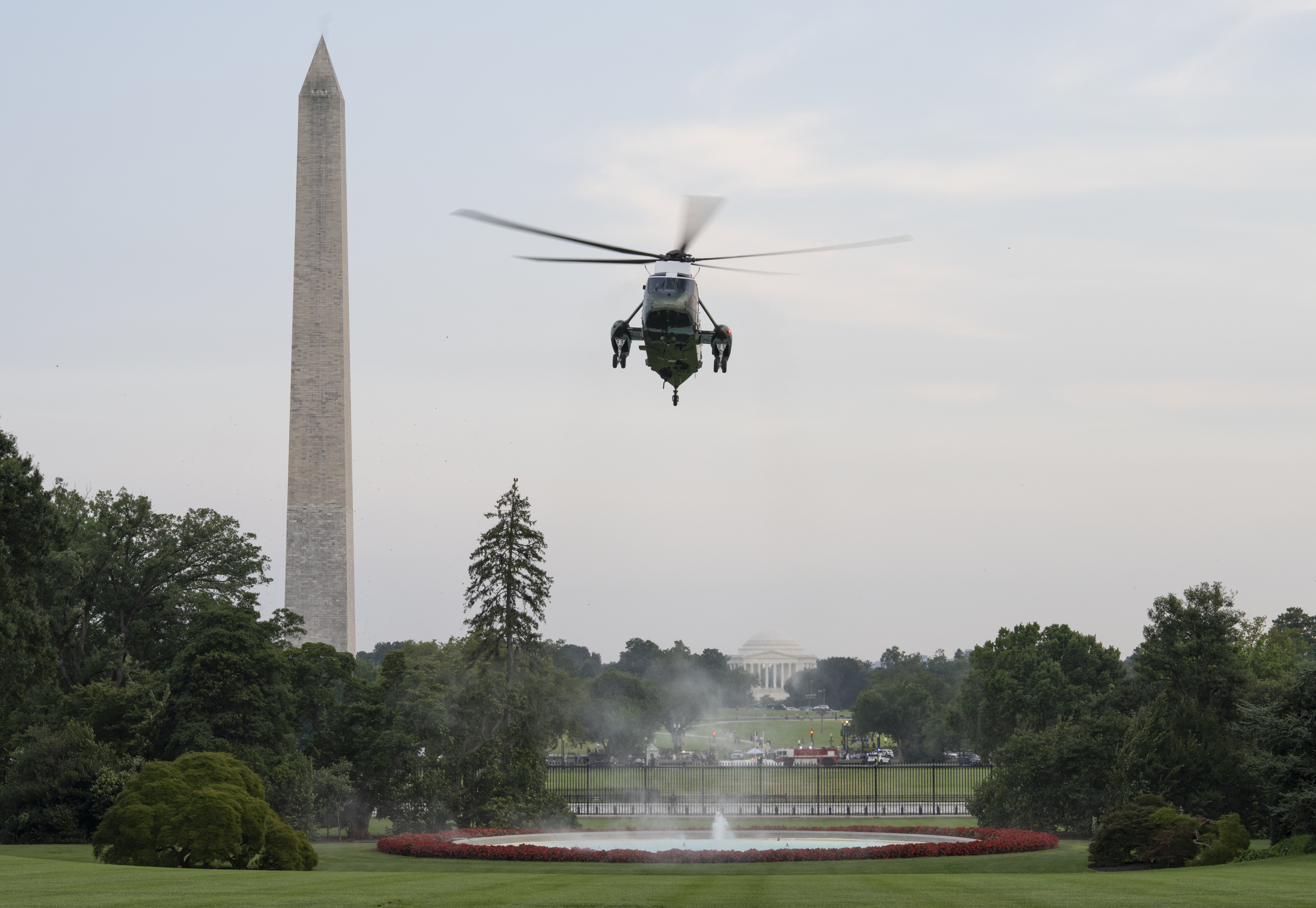
President Donald Trump arrives on Marine One on the South Lawn of the White House, Tuesday, July 29, 2025, after a trip to Scotland. Official White House Photo by Molly Riley. Source: The White House / Flickr — United States Government Work.
By Harun al-Aswad in Paris
11 August 2026 . Lire en français
The United States’ strategy in the Western Hemisphere is reshaping transatlantic relations, prompting European allies to reassess their defence autonomy.
President Donald Trump’s efforts to expand US influence have increased economic, diplomatic and military pressure on Washington’s European allies.
The strategy, driven by US economic and defence priorities, seeks to limit extra-hemispheric interference and enforce a sphere-of-influence approach known as the “Trump Corollary to the Monroe Doctrine”, or the “Donroe Doctrine”.
“Under the current administration, the United States views the Western Hemisphere as a region that it not only protects, but also supervises, for want of a better phrase,” Dr Dafydd Townley, Senior Teaching Fellow in International Security at the University of Portsmouth, said.
“The Donroe Doctrine treats the hemisphere as an exclusive US sphere, essentially denying China and Russia any strategic footholds in the region, and using military force unilaterally if it believes it needs to.”
The strategy has extended beyond diplomacy to Canada and Greenland, a Danish territory, challenging relations with European allies in the North Atlantic Treaty Organization (NATO).
The US has conducted controversial military operations in the Caribbean, raising stability implications across the Antilles.
“For the first time in 15-20 years, the overwhelming majority of the countries in the Western Hemisphere are now led by pro-American leaders,” US Secretary of State and National Security Advisor Marco Rubio said.
Reasserting US primacy
Days after Rubio visited Panama, the Panamanian government withdrew from China’s Belt and Road, an initiative involving around 150 countries, including Cuba, Venezuela and Iran.
The Panamanian High Court also invalidated CK Hutchison’s contract, a Chinese-based company operating ports at both ends of the Panama Canal.
During a subsequent visit, US Secretary of War Pete Hegseth signed a Joint Declaration on the Security and Operation of the Panama Canal, expanding US naval access in the Caribbean.
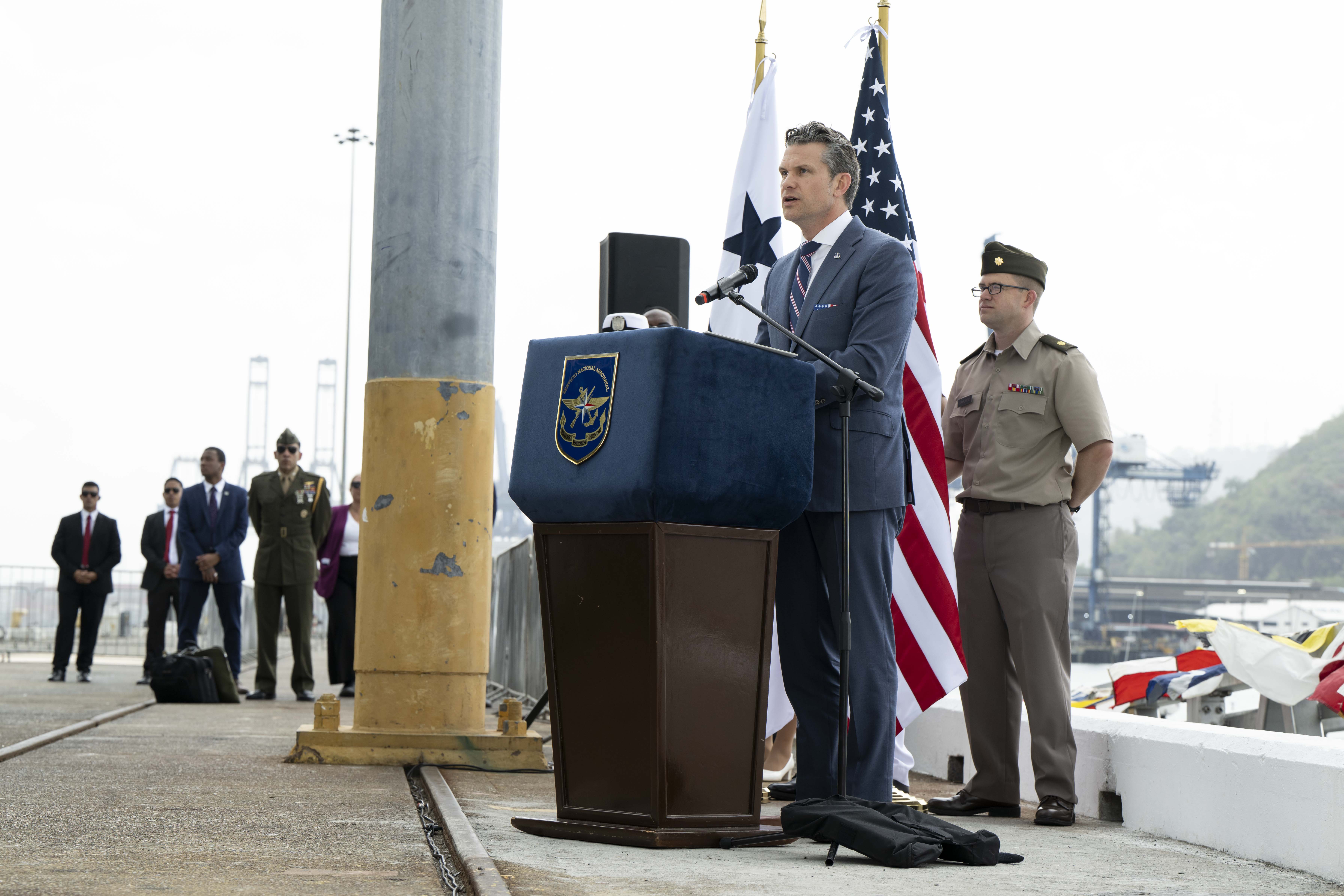
Secretary of Defense Pete Hegseth provides remarks at the inauguration for Pier 3 in Panama City, Panama, April 8, 2025. DOD photo by US Air Force Senior Airman Madelyn Keech. Source: US Secretary of War / Flickr — United States Government Work.
The two governments agreed to expand military cooperation, including rotational deployments at former US bases, maritime surveillance, cyber security and intelligence sharing.
The strategy extended to Venezuela, where the US removed its leader, Nicolás Maduro, and transferred him to a federal court in New York to face narco-terrorism and drug-trafficking charges.
Directing Venezuelan oil revenues into Foreign Government Deposit Funds at the US Treasury, Trump said: “We brought millions of barrels of oil out.”
The policy generated more than $13 billion.
Harun Al-Aswad, a crisis journalist, takes you to Venezuela to hear how people are experiencing life after the US operation. Follow Stories From the Front on Spotify to listen to the full episode soon.
Trump also redesignated Cuba as a State Sponsor of Terrorism and declared a national emergency over Cuba, citing Russia’s largest overseas signals intelligence facility there and ties with China, Iran, Hamas and Hezbollah.
“The United States will continue to address the national security threats posed by the Cuban Communist regime and drive the economic and political reforms to give Cuba a better future,” Rubio said.
David Des Roches, a former Pentagon Director of NATO Operations and a professor at the Thayer Marshall Institute, discusses why Cuba matters to US foreign policy, the future of US–Cuba relations, and the wider geopolitical competition with Russia and China.
The full interview is available on Harun al-Aswad’s YouTube channel.
The US “maximum pressure” policy has strained Cuba’s relations with Caribbean governments, disrupted regional trade and increased migration and security concerns, Jorge Duany, a Professor Emeritus of Anthropology at Florida International University, said.
“Increased militarisation in the Caribbean, especially the possibility of a US strike against Cuba, has further heightened regional tensions to a level not seen since the end of the Cold War.
“The prospect of a new Cuban migration crisis poses security challenges for nearby islands as both transit and destination countries,” Duany, the former Director of the Cuban Research Institute, added.
Interlinked interests
The Caribbean’s strategic importance extends beyond the US.
The UK, France and the Kingdom of the Netherlands, former colonial powers that once controlled much of the Western Hemisphere, retain overseas territories with economic, security and defence interests.

European overseas territories in the Western Hemisphere
The Caribbean is also a major drug-trafficking hub, with criminal organisations operating routes linking Latin America with North America and Europe, according to the European Parliament Research Service.
The US Department of State did not respond to questions on how Washington assesses its Caribbean policy’s implications for European allies with territories in the region, including the potential impact on migration, organised crime and security.
However, an earlier period of tension in the Caribbean, amid Cuba’s war of independence from Spain in the late nineteenth century, Washington argued regional instability affected US national interests, according to a US Department of State overview.
“The long-held US interest in ridding the Western Hemisphere of European colonial powers and American public outrage over brutal Spanish tactics created much sympathy for the Cuban revolutionaries,” the overview said.
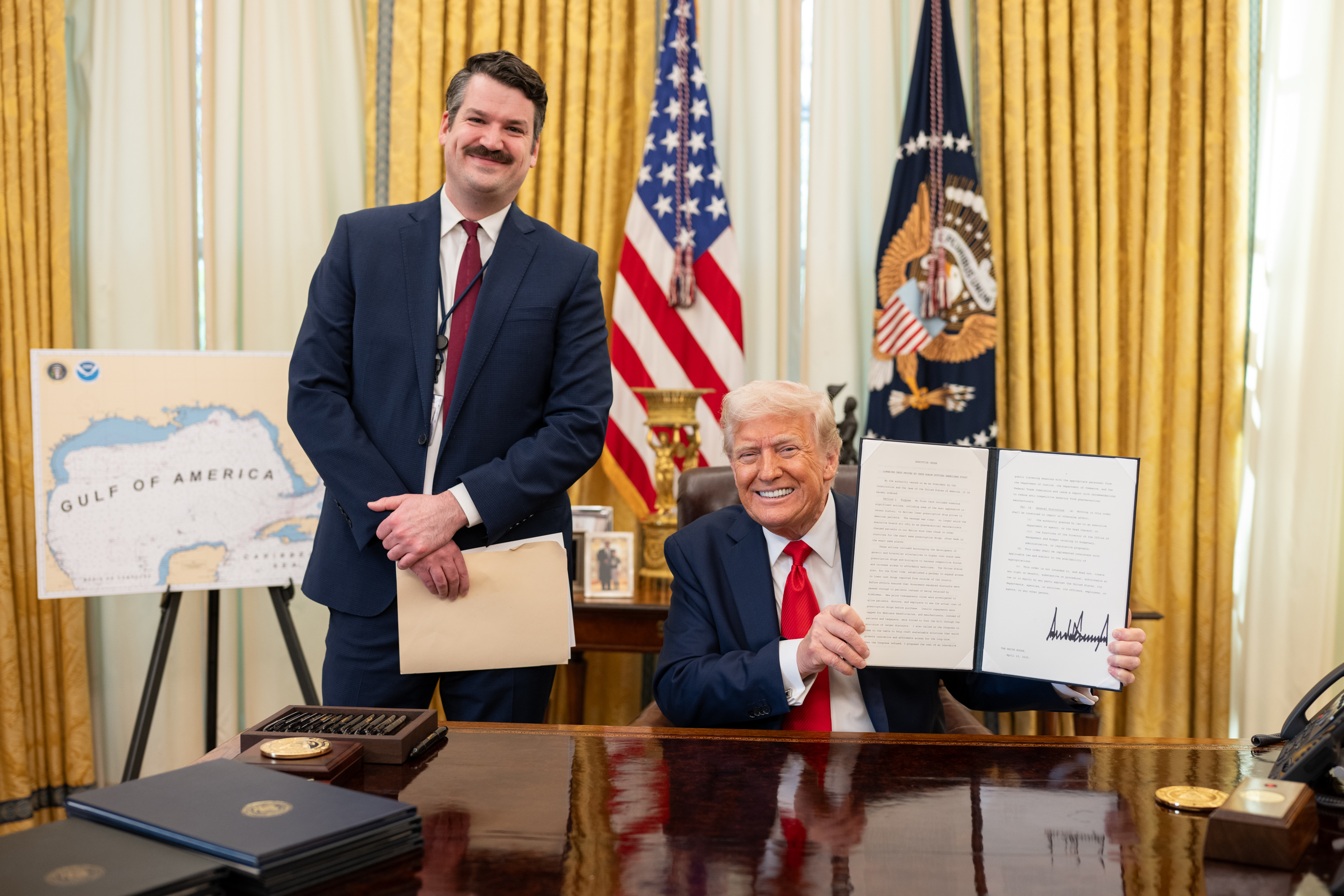
President Trump signs executive orders in the Oval Office, with a map of the “Gulf of America” behind him, February 15, 2025. By Joyce N. Boghosian. Source: The White House / Flickr — United States Government Work.
France’s Minister for Overseas Territories, Naïma Moutchou, did not respond to requests for comment on the implications of recent US policy for France’s Caribbean territories, including migration and organised crime.
The Netherlands and the US have a long-standing relationship that also entails cooperation in the Caribbean, the Dutch Ministry of the Interior and Kingdom Relations and the Ministry of Foreign Affairs said.
The Dutch Caribbean islands have a “high dependency” on the US for goods and services and are “inherently vulnerable to geopolitical shifts” because of their reliance on imports and tourism, the ministries said.
“Changes in the broader geopolitical or economic environment can therefore have implications for trade flows, tourism demand, migration patterns, economic development and regional security.
“We cooperate closely in combatting transnational organized crime in the region.” Violent organised crime in the Latin America and Caribbean region poses a threat to security and stability; “therefore, cooperation with partners to achieve regional stability is important,” the ministries added.

MH-60S Sea Hawk helicopters assigned to Helicopter Sea Combat Squadron 26 fly in formation over the amphibious assault ship USS Iwo Jima in the US Southern Command area of responsibility, June 5, 2026. By Navy Petty Officer 3rd Class Andrew Eggert. Source US Department of War — United States Government Work.
“The US, the Netherlands, and others are working together in the Joint Inter Agency Taskforce South (JIATF-S). Under the Fol agreement (Forward Operating Liaison), the US can use the airports of Curacao and Aruba [Dutch overseas territories] as non-lethal logistical hubs.”
The US-led JIATF-S includes around 20 partner countries, including France, the UK and Canada, to counter drug-trafficking organisations across the Western Hemisphere.
The UK Foreign, Commonwealth & Development Office did not respond to questions on the implications of recent US Caribbean policy for the British Overseas Territories, including regional security, migration, organised crime, drug trafficking, and cooperation with the US.
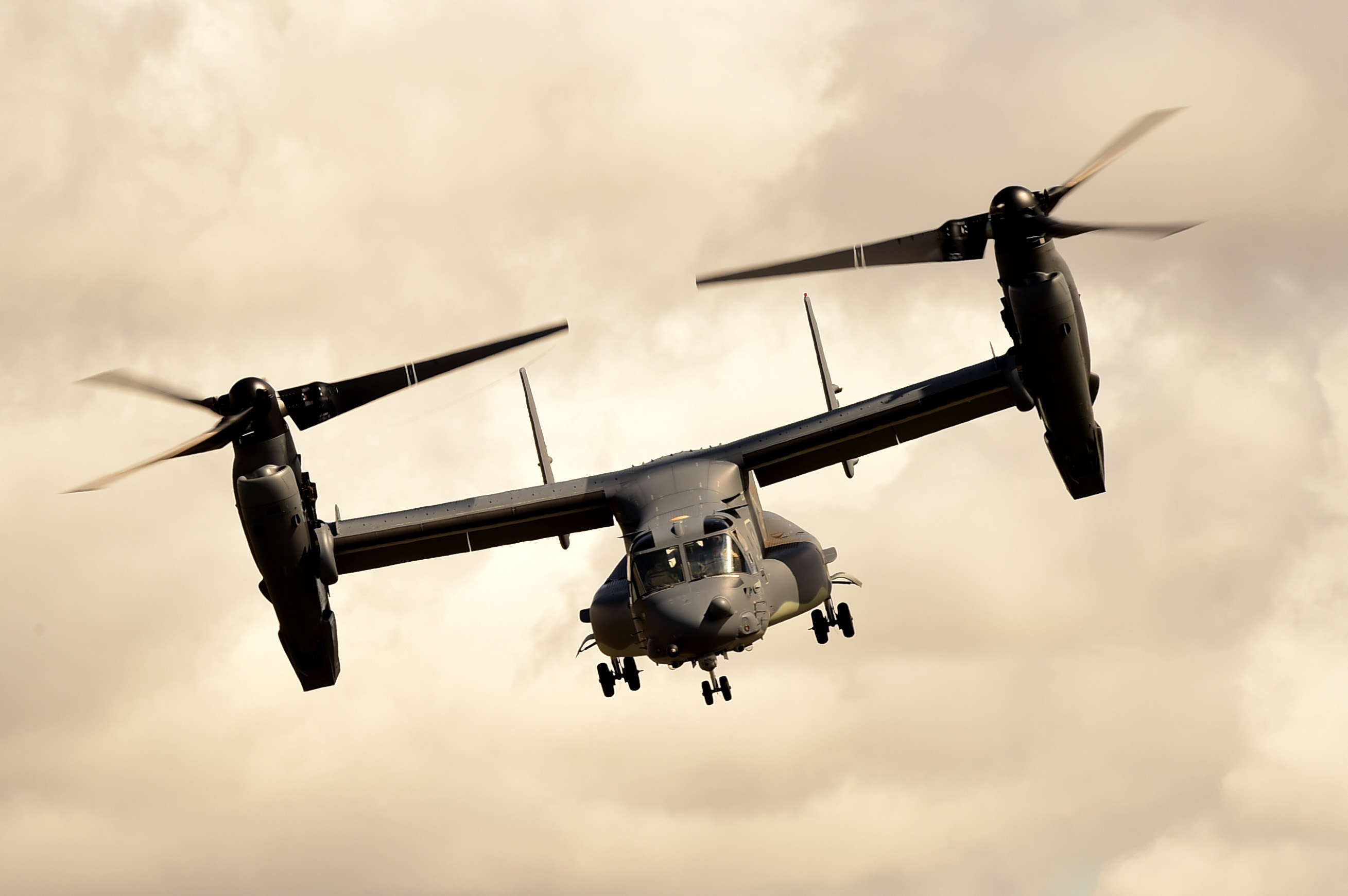
A CV-22B Osprey assigned to the 7th Special Operations Squadron performs an aerial display during the Royal International Air Tattoo at Royal Air Force Fairford, England, July 19, 2015. US Air Force photo by Tech. Sgt. Chrissy Best. Source: US Air Force / Flickr — United States Government Work.
The British Overseas Territories depend on both UK protection and US regional dominance, Townley said. “London’s withholding of intelligence” over recent US strikes’ legality had strained cooperation used to police Caribbean waters, he added
“US unilateralism also implicitly diminishes deference to other powers’ sovereignty in the region. Any destabilisation in Venezuela, Cuba, or Haiti could push refugee flows toward the territories.
“If US strikes push traffickers off established Venezuela–Caribbean routes, more narcotics might move through waters the UK is responsible for patrolling.”
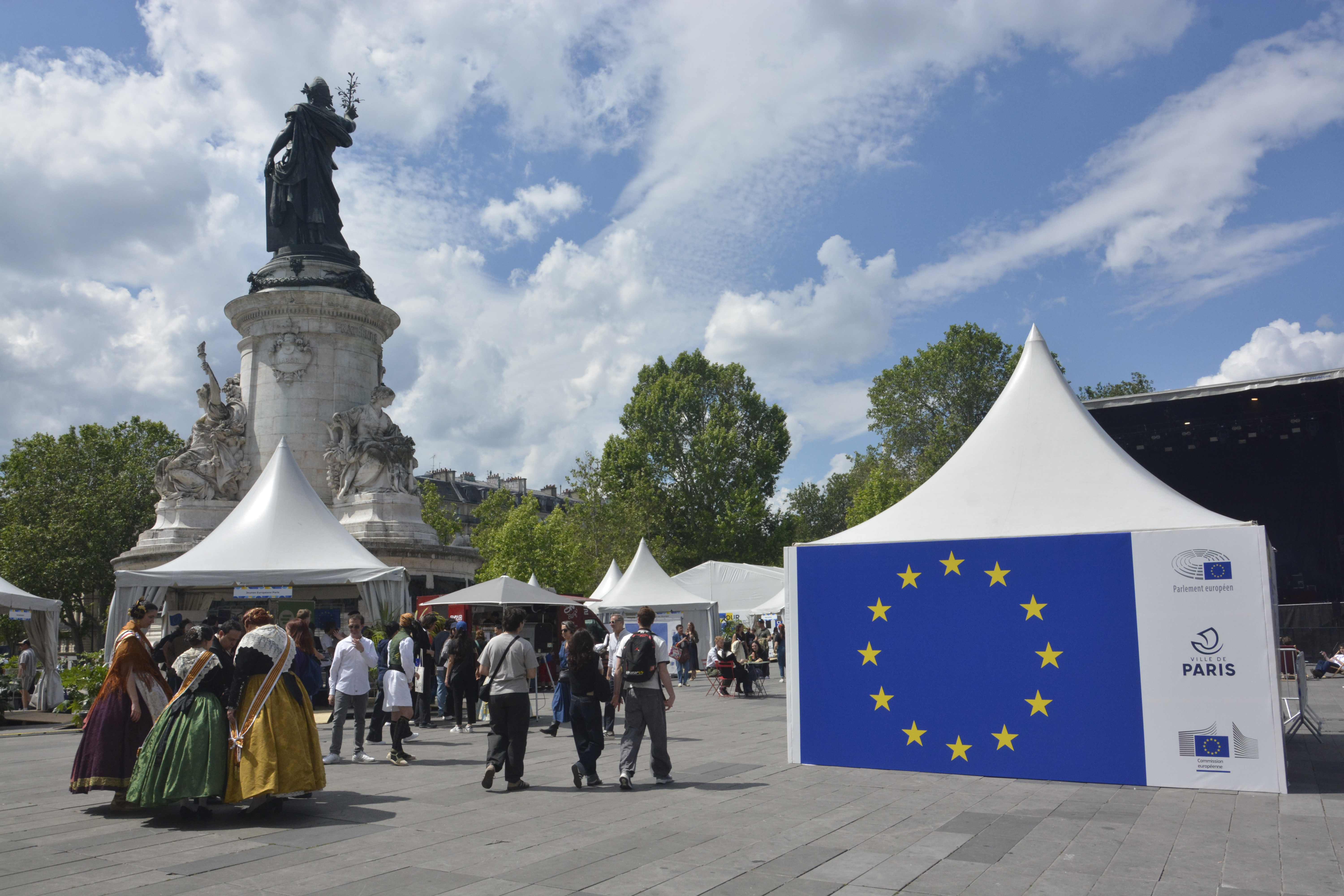
European Day celebrations at Place de la République in Paris, with talks featuring European and French officials and representatives, alongside information stands representing European institutions and organisations, including the Paris-based think thank Confrontations Europe. Photo by Harun al-Aswad, 9 May 2026.
The implications differ for France, according to Jérôme Quéré, General Delegate of the Paris-based think tank Confrontations Europe.
France’s overseas territories are a direct national responsibility rather than an extension of security alliance and commitments, Quéré said
Quéré also cautioned against interpreting Trump’s rhetoric literally.
Trump “deliberately creates a lot of ambiguity” and “words and actions are different”, he said.

French EBRC Jaguar armoured reconnaissance and combat vehicle during the Bastille Day military parade in Paris, France. Photo by Harun al-Aswad, 14 July 2025.
Trump’s next target could be Cuba, but for now the US does not appear to have an “expansionist vision” for the other Caribbean islands, Christophe Gomart, a Member of the European Parliament, said.
“Europe must remain very vigilant and monitor the situation carefully,” Gomart, the former Director of French Military Intelligence, added.
Gomart said he had recently visited Saint Pierre and Miquelon, a French territory next to Canada, amid Trump’s repeated calls to annex Canada.
He pointed to Greenland, saying Europe had responded with unusual unity by rejecting Trump’s calls to acquire the island.
“I advocate for a militarily strong Europe, so that Europe commands respect, with the ability to make decisions quickly and to be highly flexible and responsive,” he said.

A live panel discussion during European Day at Place de la République in Paris, featuring Christophe Gomart, Member of the European Parliament and former Director of French Military Intelligence, seated on the left. Photo by Harun al-Aswad, 9 May 2026.
Finland, France, Germany, the Netherlands, Norway, Sweden and the UK joined the Danish-led Arctic Endurance military exercise in Greenland following renewed US interest in the island.
“We stand in full solidarity with the Kingdom of Denmark and the people of Greenland,” the countries said in a joint statement.
Territorial ambitions
Trump said he would use “economic” rather than military force to pursue acquiring Canada and Greenland.
US annexation projects date back centuries. US troops invaded British-colonised Canada in 1812, while some American politicians later called for its annexation.
Washington developed War Plan Red in 1930, a contingency scheme for a hypothetical war with Britain that included invading Canada, according to declassified US National Archives documents.
The US sought to purchase Greenland in 1867, then proposed a land swap in 1910 with Denmark and Germany to acquire the island.
US troops landed in Greenland during the Second World War to deter a German invasion, and Denmark later rejected a US offer to purchase the island.
A 1955 US military study concluded that acquiring Greenland would provide military advantages despite political and economic obstacles.
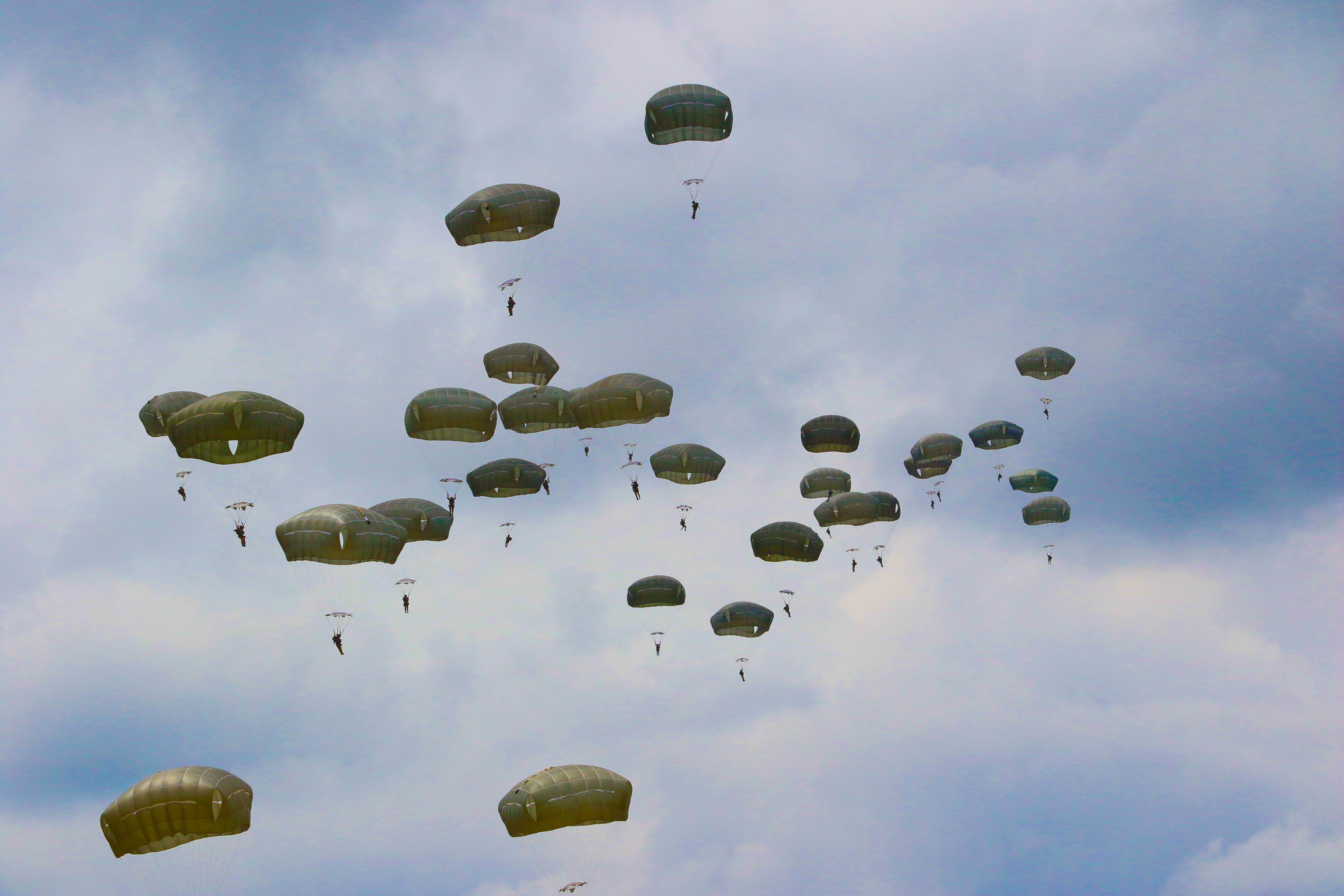
US and British paratroopers assigned to the 3rd Brigade Combat Team, 82nd Airborne Division, and 16th Air Assault Brigade, British Parachute Infantry, descend during a joint airborne operation at Fort Bragg, N.C., August 4, 2016. US Army photo by Sgt. Anthony Hewitt. Source: US Department of War / Flickr — United States Government Work.
“We need Greenland from the standpoint of national security,” Trump said.
The island, home to about 56,000 people, contains valuable rare earth minerals and sits along increasingly accessible Arctic sea routes
Trump threatened European countries opposing the proposal with tariffs.
“So many red lines are being crossed,” Belgian Prime Minister Bart De Wever said, referring to Trump’s tariff threats.

USS Arleigh Burke leads the George H.W. Bush Carrier Strike Group during a strait transit exercise in the Atlantic Ocean, December 10, 2013. DoD photo by Justin Wolpert, US Navy. Source: US Department of War / Flickr — United States Government Work.
“We are in the midst of a rupture,” Canadian Prime Minister Mark Carney said.
“France is committed to the sovereignty and independence of nations, in Europe and elsewhere,” French President Emmanuel Macron said.
“No intimidation or threat will influence us.”
NATO under pressure
Trump renewed his calls for Greenland during the latest NATO summit, saying: “It’s an important part of the United States.”
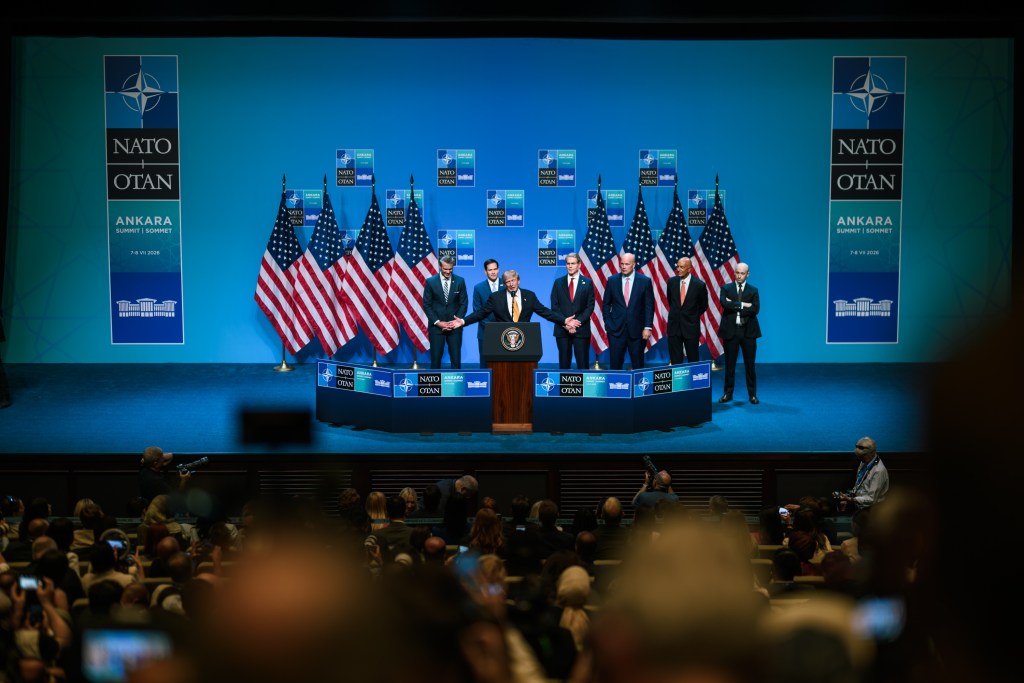
President Donald J. Trump speaks at a press conference during the 2026 NATO Summit in Ankara, Turkey, July 8, 2026. Official White House Photo by Daniel Torok. Source: The White House / Flickr — United States Government Work.
“Trump’s repeated statements about taking control of Greenland crossed a red line for many European partners,” Sébastien Slavitescu, a former diplomat at the Romanian Ministry of Foreign Affairs, said.
“The most successful alliance in history worked because its powerful armies were held together by something equally important: trust,” Slavitescu, the NATO and European Union expert, added.
“NATO is at its worst-and perhaps weakest-point in its history.”
Trump has questioned the future of US forces in Europe, saying Europe was “a very different place” from 20 years ago.

US bases in Europe provide forward defence, logistics and training, with some hosting US nuclear weapons under NATO’s nuclear-sharing arrangements.
The US Department of War later announced a six-month review of US force posture and basing in Europe, including whether European allies were taking greater responsibility for their own defence.
Allies were given a “test” to support America’s operations against Iran, Hegseth said.

A US Air Force HH-60W Jolly Green II helicopter releases flares during combat search and rescue training with Swedish Air Force rangers during Cold Response in Norway, March 13, 2026. The exercise strengthened NATO’s rapid response capabilities in the High North. Photo by Juliana Luz.Brooke Rogers. Source: US Air Force — United States Government Work.
“The main problem today is that Europe and the Trump administration no longer perceive threats in the same way,” Slavitescu said.
“Europeans see Russia’s invasion as a direct threat to their security and to the international order.
“The Trump administration appears to see Russia as a manageable threat — if a threat at all. Trump keeps insisting that NATO ‘wasn’t there’ in Iran.”
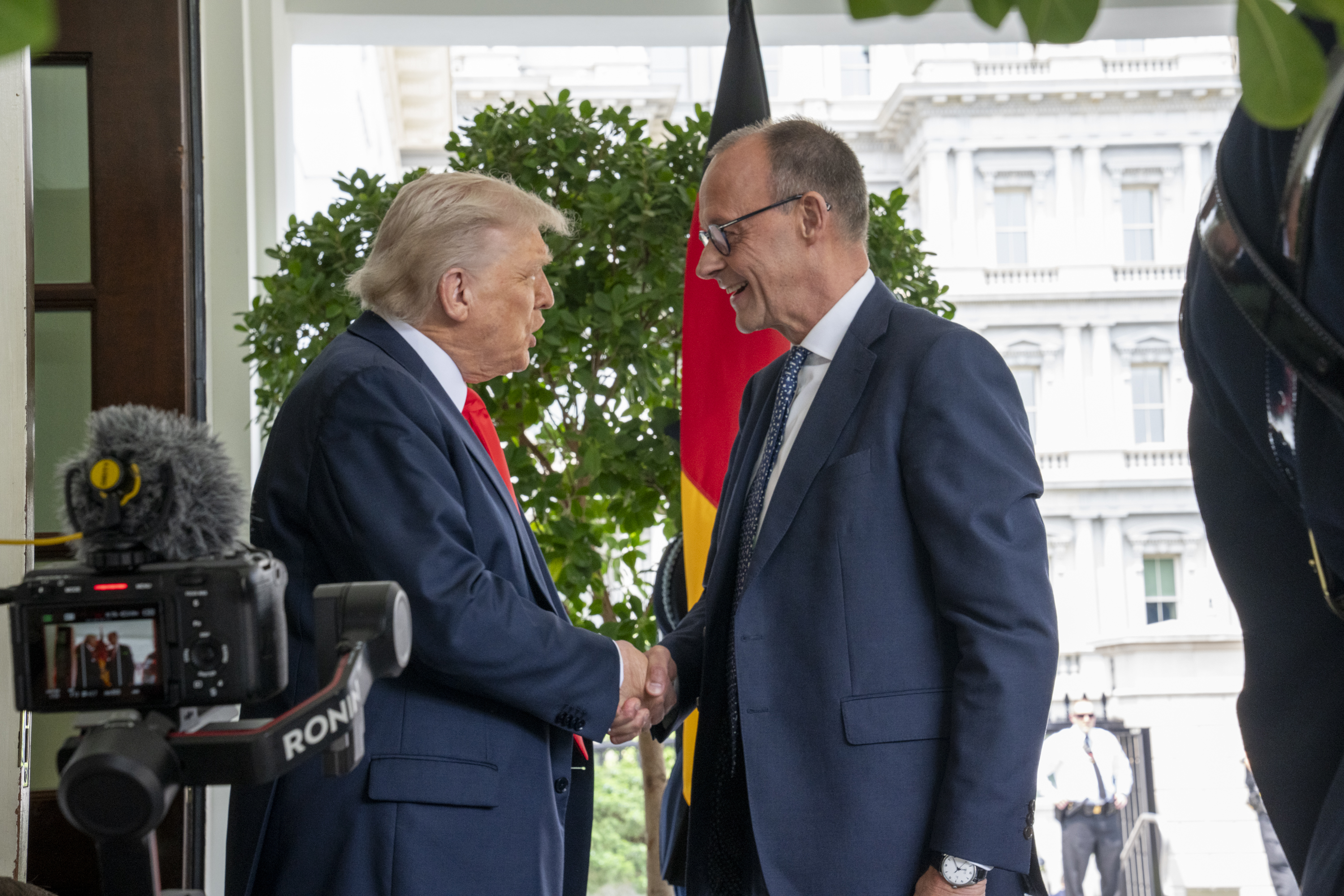
President Donald Trump greets German Chancellor Friedrich Merz at the West Wing entrance of the White House, June 5, 2025. Official White House Photo by Nick Choiniere. Source: The White House / Flickr — United States Government Work.
A Pentagon email discussed reassessing US diplomatic support for “longstanding European imperial possessions”, according to Reuters, including the Falkland Islands, a British Overseas Territory off the coast of Argentina, in the Western Hemisphere
“It was just an email with some ideas,” Rubio told The Sun.
Trump criticised Italy, Spain and Germany over their positions on the Iran war, called some European allies “cowards” and described NATO as a “paper tiger”.
He described the UK’s aircraft carrier as a “toy”.

President Donald Trump boards Marine One on the South Lawn of the White House, February 6, 2026, en route to Joint Base Andrews for a trip to Palm Beach, Florida. Official White House Photo by Molly Riley. Source: The White House — United States Government Work.
“It all began with, if you want to know the truth, Greenland,” Trump said, referring to his criticism of NATO. “We want Greenland. They don’t want to give it to us and I said, ‘OK, bye-bye.’”
European autonomy
“A burden shifting from the US towards Europe is ongoing and will continue as part of US defence and national security strategy,” Finland’s President Alexander Stubb told The Wall Street Journal.
“We can already sense that NATO is gradually beginning to weaken with the Americans stepping back,” Gomart said.
“We need European Union countries to think together about what we are capable of doing in terms of defence. What kind of defence architecture do we want?
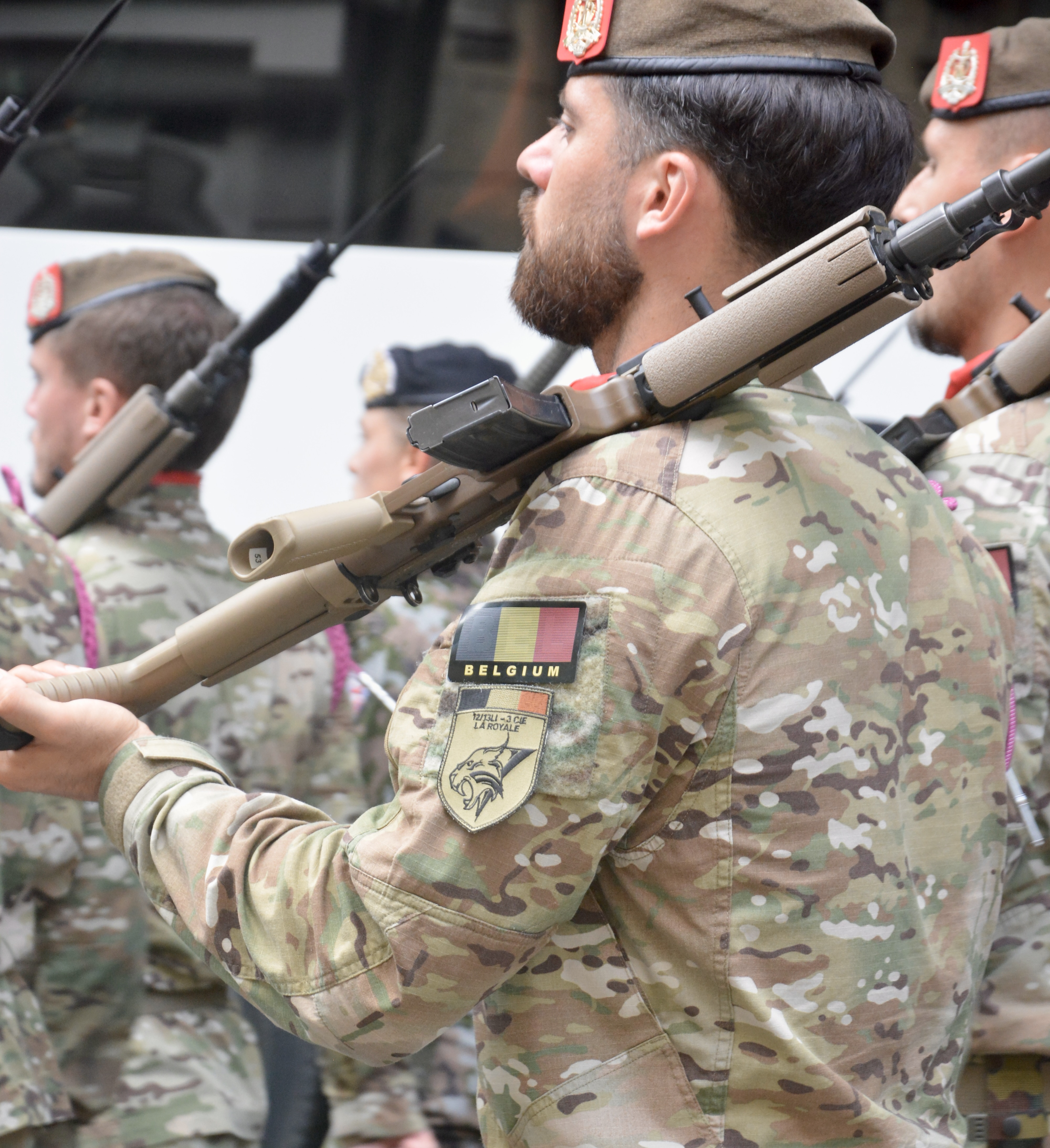
Belgian forces during the Bastille Day military parade in Paris, France. Photo by Harun al-Aswad, 14 July 2025.
“I support the creation of a European military headquarters of around 1,400 personnel, with an annual budget of approximately €210 million, so that Europe is genuinely capable of planning and conducting military operations.
“Above all, we need to think seriously about what we want if we are to be capable of defending ourselves without NATO.
“NATO includes Turkey, with which we do not necessarily share the same vision. Turkey occupies part of the island of Cyprus.”
Turkey, the alliance’s second-largest army, has occupied northern Cyprus since 1974, while disputes over maritime boundaries and its acquisition of Russia’s S-400 system have complicated relations with its allies.
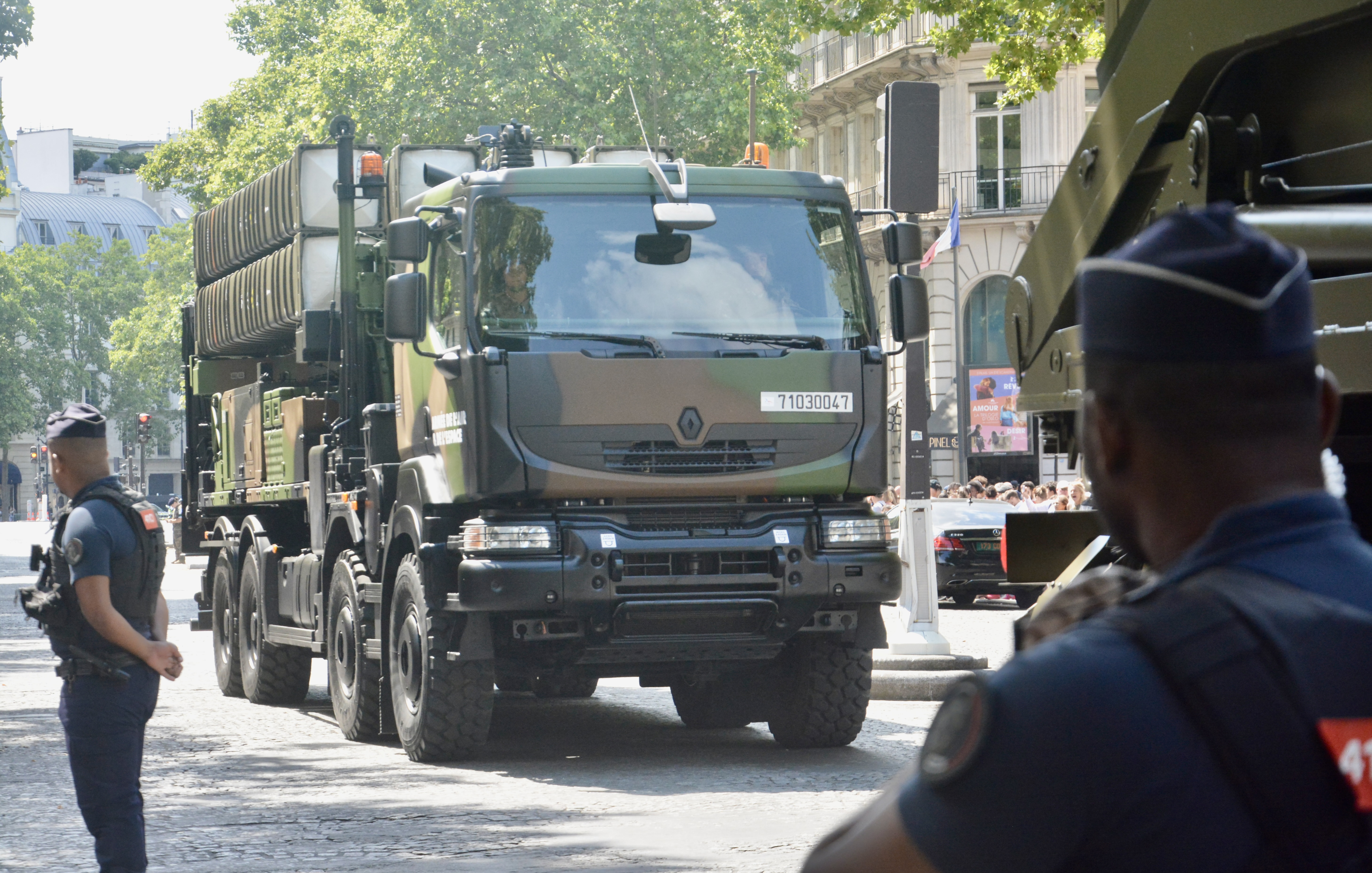
French Air and Space Force SAMP/T Mamba air-defence vehicle equipped to transport advanced Aster 30 missiles during the Bastille Day military parade in Paris, France.
Photo by Harun al-Aswad, 14 July 2025.
“NATO also includes the United Kingdom and Canada,” Gomart said.
The UK remains a leading European nuclear and security power, but Brexit has reshaped its relationship with the EU, Dr Kris Nolan, Senior Lecturer at the University of Portsmouth, said.
“We are still sharing intelligence, we are still collaborating with the EU, just on different terms.”
However, Brexit had made it more difficult for the UK and EU to act as close partners on “strategic autonomy”; Britain would likely play a more indirect role, Nolan added.
Poland, the Netherlands, Belgium, Greece, Sweden and Denmark would join France’s strategic dialogue on nuclear deterrence, alongside the UK and Germany, Macron said.

A Navy EA-18G Growler takes off from the flight deck of the aircraft carrier USS George Washington in the Philippine Sea, June 3, 2026. Photo by Navy Seaman Apprentice Leo Friedlein. Source: US Navy — United States Government Work.
The US would remain a key contributor to Europe’s security through NATO’s nuclear mission, but Washington’s evolving defence priorities should encourage Europe to assume greater responsibility for its own security, Macron added.
“There is no need to have equal arsenals for that to happen… French nuclear capabilities are strategic and exclusively strategic.
“Europeans have become used to their security depending on rules made by others, in other times, and rescinded also, sometimes, unbeknownst to them, often at their expense.”

President Donald J. Trump attends G7 working session IV, on growth and imbalances, at the Hotel Royal Evian, June 17, 2026, in Evian-les-Bains, France. Official White House Photo by Daniel Torok. Source: The White House / Flickr — United States Government Work.
The EU established the Security Action for Europe instrument, providing loans of up to €150 billion for member states to increase defence investment.
The UK and France launched the Coalition of the Willing in 2025 to coordinate military support for Ukraine outside NATO.
The two countries launched the Strait of Hormuz Maritime Navigation Initiative to protect freedom of navigation through the waterway, coordinating military planning with partners outside NATO’s formal framework.
Corollary budget
The US and NATO launched the Prioritised Ukraine Requirements List, allowing European allies to finance US-made weapons for Ukraine while supporting the US defence industry.
Senator Jeanne Shaheen questioned the mechanism.
“We want Europe stepping up and funding and shouldering the burden. They are rich countries,” Hegseth told Senator Angus King.
The US is returning NATO to its “warfighting roots” while prioritising the homeland, the Western Hemisphere and Indo-Pacific, he added.
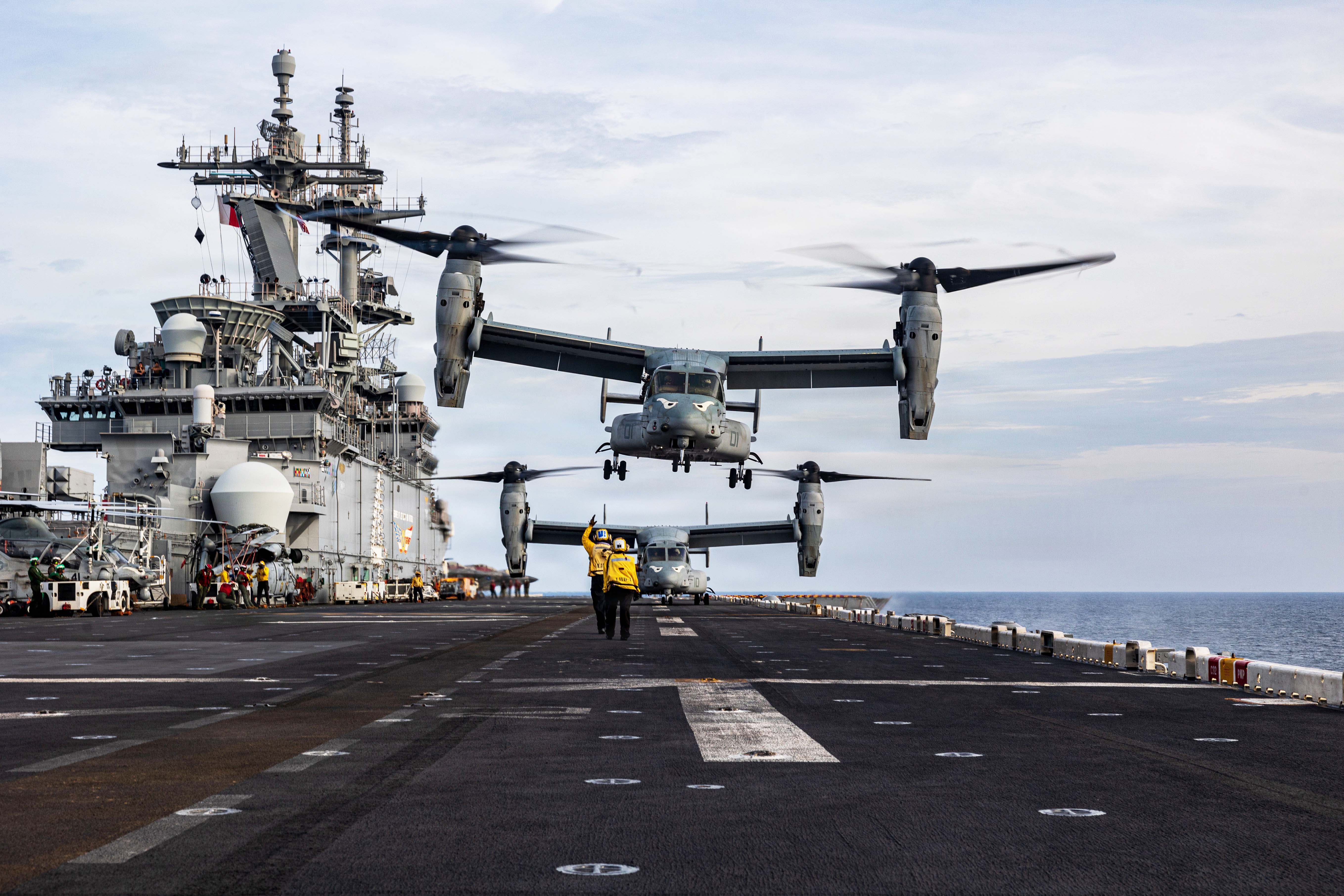
A Marine Corps MV-22B Osprey takes off during flight operations aboard the amphibious assault ship USS Boxer in the South China Sea, June 10, 2026. Photo by Marine Corps Lance Cpl. Nicole Stuart. Source: US Department of War — United States Government Work.
“Under President Trump’s leadership, NATO set the new global standard for allied defence spending, 5% of GDP all in on defence.”
The US Department of War’s proposed 2027 budget excluded support for Ukraine, citing $600 billion in previous US spending on the war.
The department argued a $1.5 trillion defence budget request to establish “peace through strength”, restore military readiness and “deter China in the Indo-Pacific”.
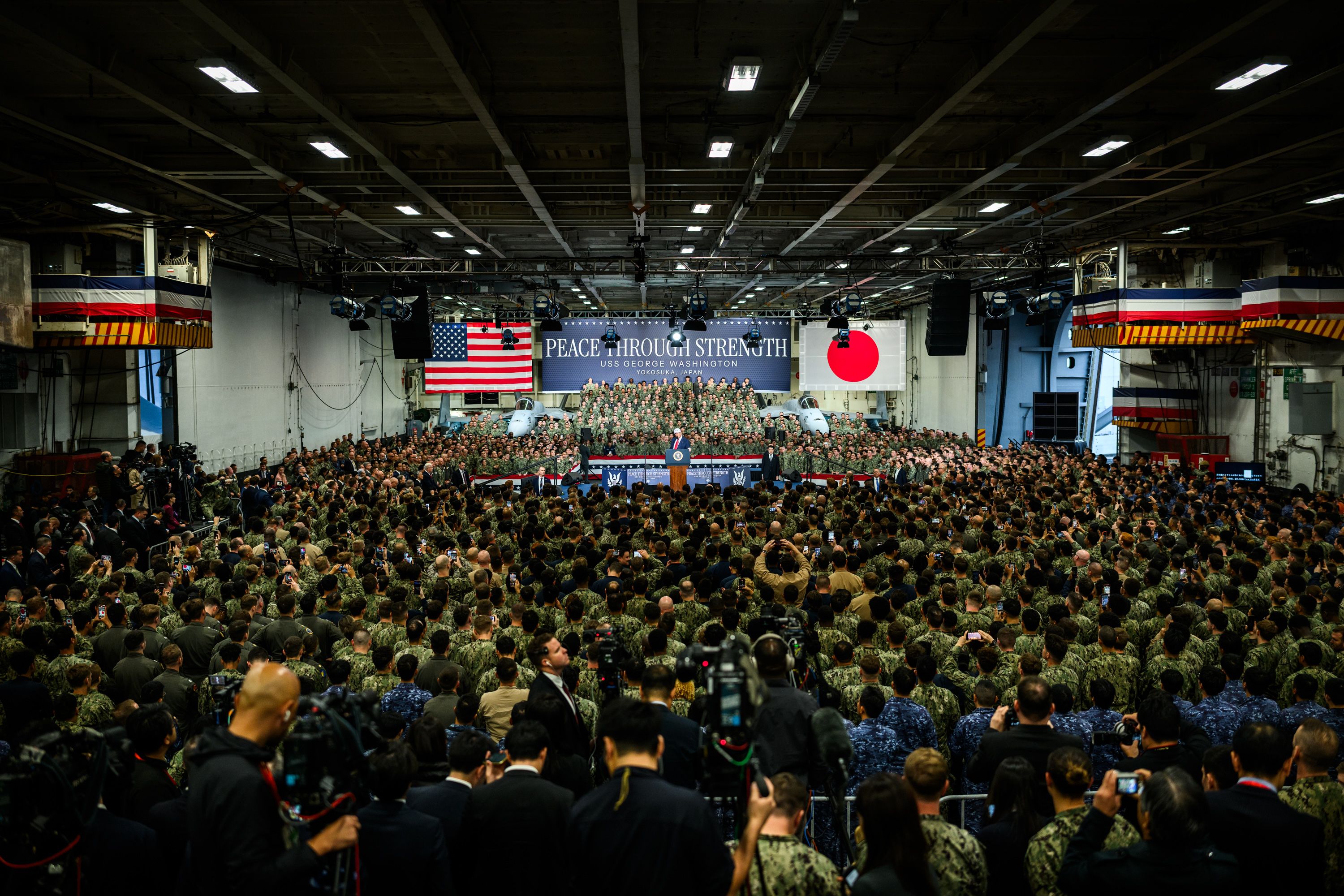
President Donald Trump delivers remarks to Yokosuka Naval troops aboard the USS George Washington at Yokosuka Naval Base, Japan, October 28, 2025. Official White House Photo by Daniel Torok. Source: The White House / Flickr — United States Government Work.
The strategy included guaranteeing US military and commercial access to key terrain, including the Panama Canal, the Gulf of America and Greenland, Hegseth said.
The US would work with regional partners but was prepared to take “focused and decisive action” to advance US interests where necessary, he added.
“This is the Trump Corollary to the Monroe Doctrine, recently codified so clearly in the National Security Strategy.”
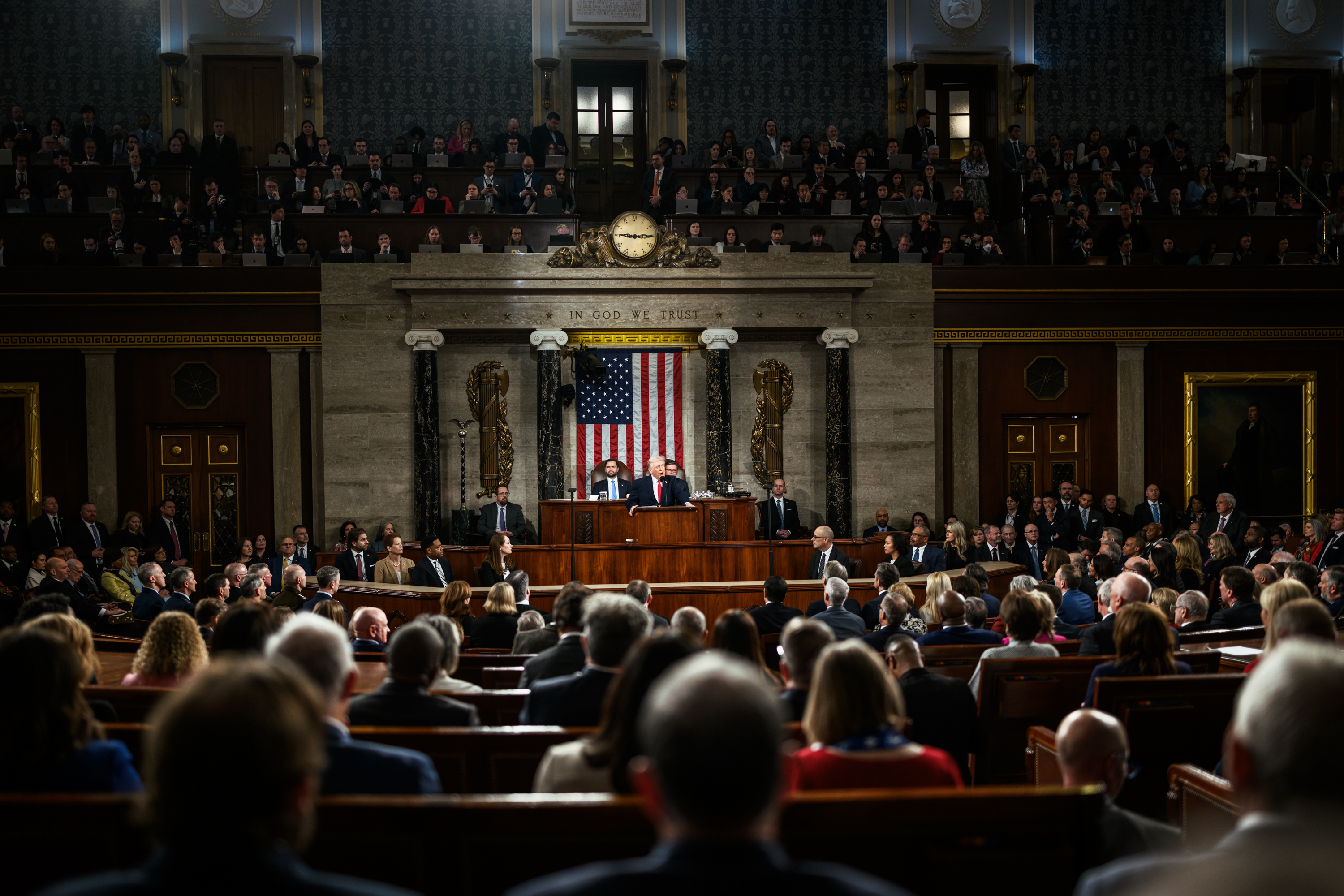
President Donald Trump’s State of the Union address, Tuesday, February 24, 2026, on the House floor at the US Capitol in Washington, D.C. Official White House Photo by Emily J. Higgins. Source: The White House / Flickr — United States Government Work.
Representative Adam Smith praised the military, saying US troops had “performed incredibly well”, but called the administration’s strategy “unrealistic”.
He criticised the approach towards allies, saying it had “pushed them all aside”, referring to France and the UK, which had brought together 44 countries interested in reopening the Strait of Hormuz.
“In the middle of the war when we were asking NATO to come join us, the president took time out to insult President Macron and his wife,” Smith said.
“On top of all of that, of course, we also want to dominate the entire Western Hemisphere, including apparently annexing Canada and invading Greenland. How is any of that realistic?”
This feature is an MA Journalism project for the University of Portsmouth, UK.
© 2026 Harun al-Aswad. All rights reserved. Except for photographs taken by the author, the photographs used in this feature are US federal government works and are used in accordance with applicable US government copyright guidance.
One thought on “US Western Hemisphere strategy tests European alliances”
Comments are closed.