Around 400 people were killed in a Pakistani air strike in Afghanistan, as ongoing attacks deepen civilian losses and worsen the economic situation, despite renewed peace negotiations in China.
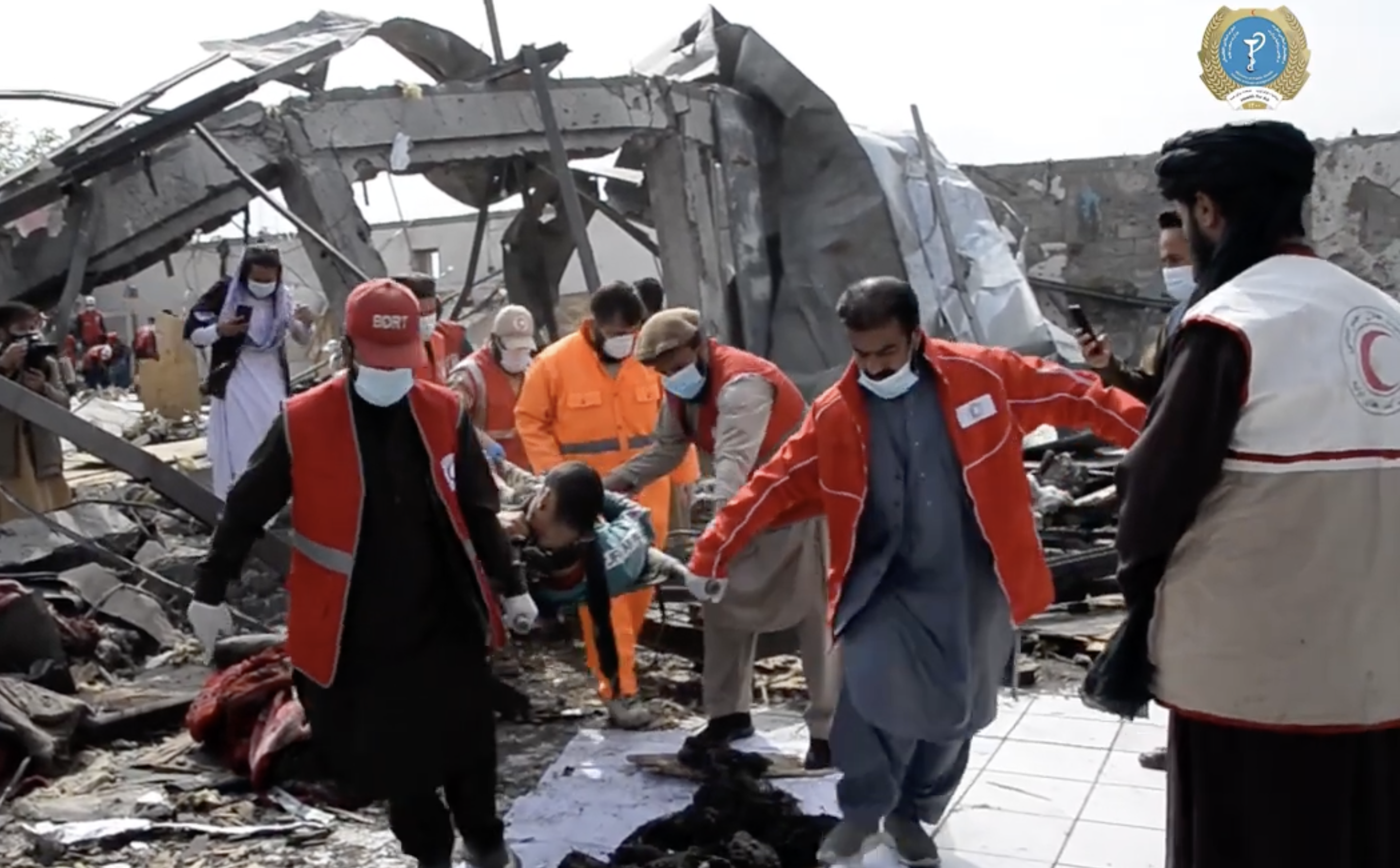
Rescue workers carry an injured man from the rubble of the Omid Hospital in Kabul after an air strike.
(Screenshot from Afghan Ministry of Public Health footage on YouTube).
By Harun al-Aswad in Paris
Fareed Nabi Zada’s relative survived tensions in Iran but not after he returned to Afghanistan.
He was killed in a Pakistani air strike on the Omid Hospital, a drug rehabilitation centre in Kabul, in mid-March.
The attack left 400 fatalities and 250 injuries, according to the Afghan government, leaving civilians across the country in mourning.
“We saw his funeral. It was very difficult. His three children have been left orphaned,” Nabi Zada said.
“Last year, their mother passed away, and now, due to this incident, my cousin’s husband has also died. The three children are now orphaned and living with us.”
The state’s capacity had been “limited” to providing treatment, and he had actually recovered before being killed, the Kabul-based man said.
Operating since 2016, the 2,000-bed rehabilitation centre was a former NATO base used by counter-terrorism troops before they left Afghanistan in 2021.
Pakistan announced on the night of the attack that it had “successfully destroyed” military infrastructure and ammunition storage in Kabul.
Days later, a Pakistani military spokesperson claimed the rehab centre was a training centre where addicts were being trained and used as suicide bombers, but locals disputed this.
“Killing addicts is not humane, and it is unforgivable,” Ismail Safi, a citizen living in Mazar-e-Sharif region, said.
“It was truly a crime. They burned the poor addicts. It was a great injustice against oppressed people,” Rohullah Qomandan Zada, another citizen, said.
“Where are human rights in the world?”
Describing the attack as unlawful, the US-based group Human Rights Watch called on Pakistani authorities to investigate the incident and hold those responsible accountable.
The group verified videos showing the centre of the hospital engulfed in flames, as around 1,000 patients were inside, many in the dining area breaking the Ramadan fast.
Amid conflict and economic fragility, the lack of a DNA system has hindered body identification in a country facing one of the world’s largest humanitarian crises in 2026, according to the UN.
“The problem is that Pakistan is oppressing us. They have targeted civilians, injured many, and killed people,” Mohammad Kazem Nouri, an Afghan civilian, said.
“For the past few years, our people had some peace. Even if the economy was weak, at least there was security, and people did not have constant fear for their safety.”
Last year’s ceasefire did not resolve the Pakistan–Afghanistan conflict, which began when the Taliban, an Islamist group, took power in Kabul in 2021.
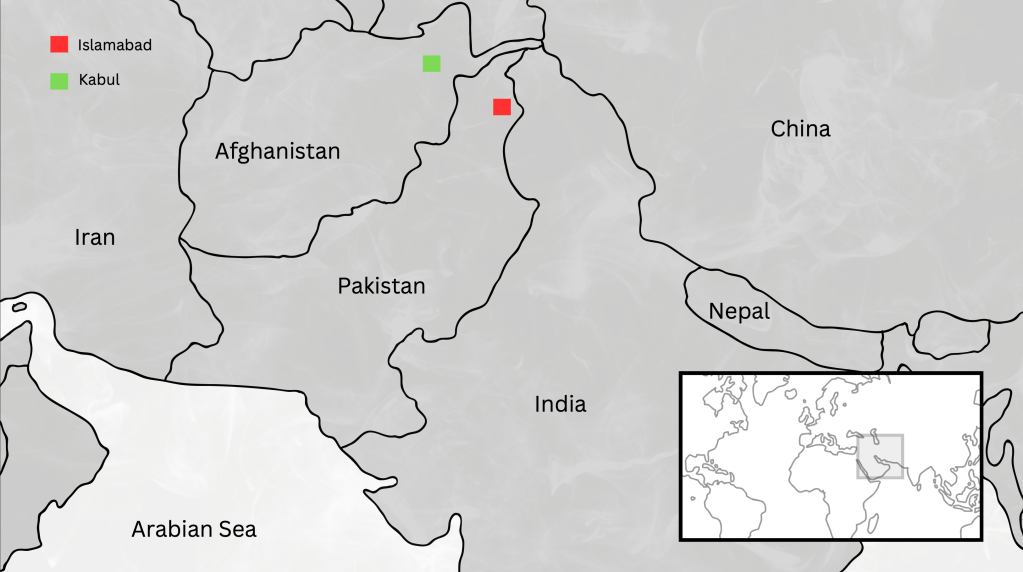
Islamabad accuses Kabul of harbouring militant groups responsible for attacks across Pakistan, allegedly with Indian support, a claim both sides deny, according to the BBC.
A recent Saudi-, Qatari-, and Turkish-brokered ceasefire also failed, and trade between the two countries continued to be disrupted, further worsening economic conditions for civilians.
Despite new talks starting in China yesterday, border areas such as Kunar still face regular attacks, reportedly killing two children, injuring 30 people, and displacing nearly 3,000 families.
“Kunar is closed. My friend told me that yesterday they were under fire all day,” a civilian living in the Nangarhar region, speaking anonymously for security reasons, said.
“Without a doubt, it has a negative impact. When you see our defenceless compatriots being killed unjustly, we feel as if our blood boils,” Asadullah Zahir, another civilian, said.
“I used to have a job, but I was dismissed, and I am now unemployed,” the man who lives in Mazar-e-Sharif, added.
Nearly half of the population is considered in need of humanitarian assistance in 2026, with the most urgent sectors being food security, protection, and health, according to UN agencies.
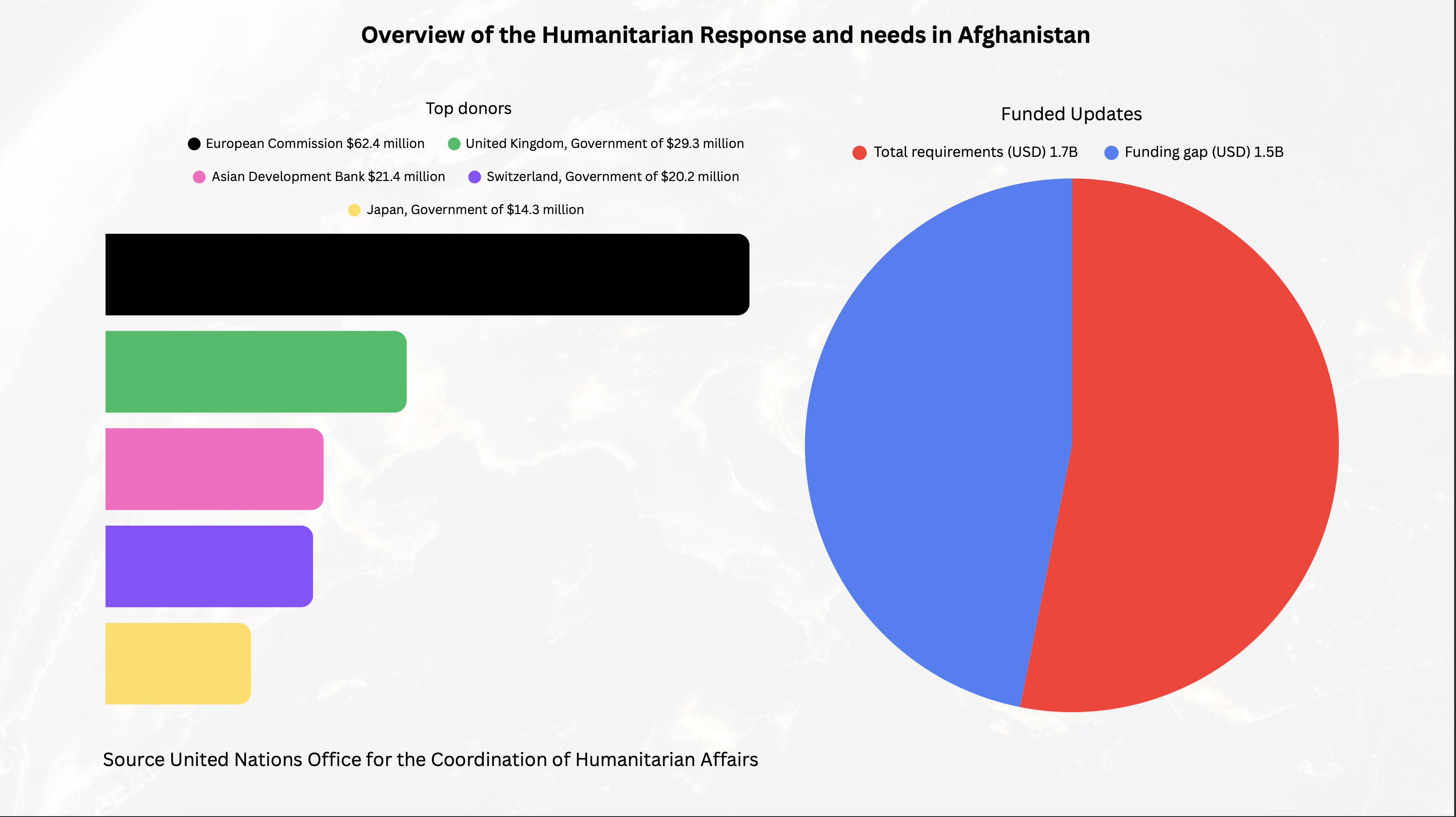
The wider Middle East conflict has worsened the situation, with nearly 150,000 Afghans returning from Iran this year and over five million from neighbouring countries since 2023, the UN said.
This article is available in French.
The story is an MA Journalism assignment for the University of Portsmouth, UK.