Uncertainty over US foreign policy, potential concessions to Russia, and operational dependence are forcing key Nato allies to reconsider American arms deals and strengthen European defence cooperation.
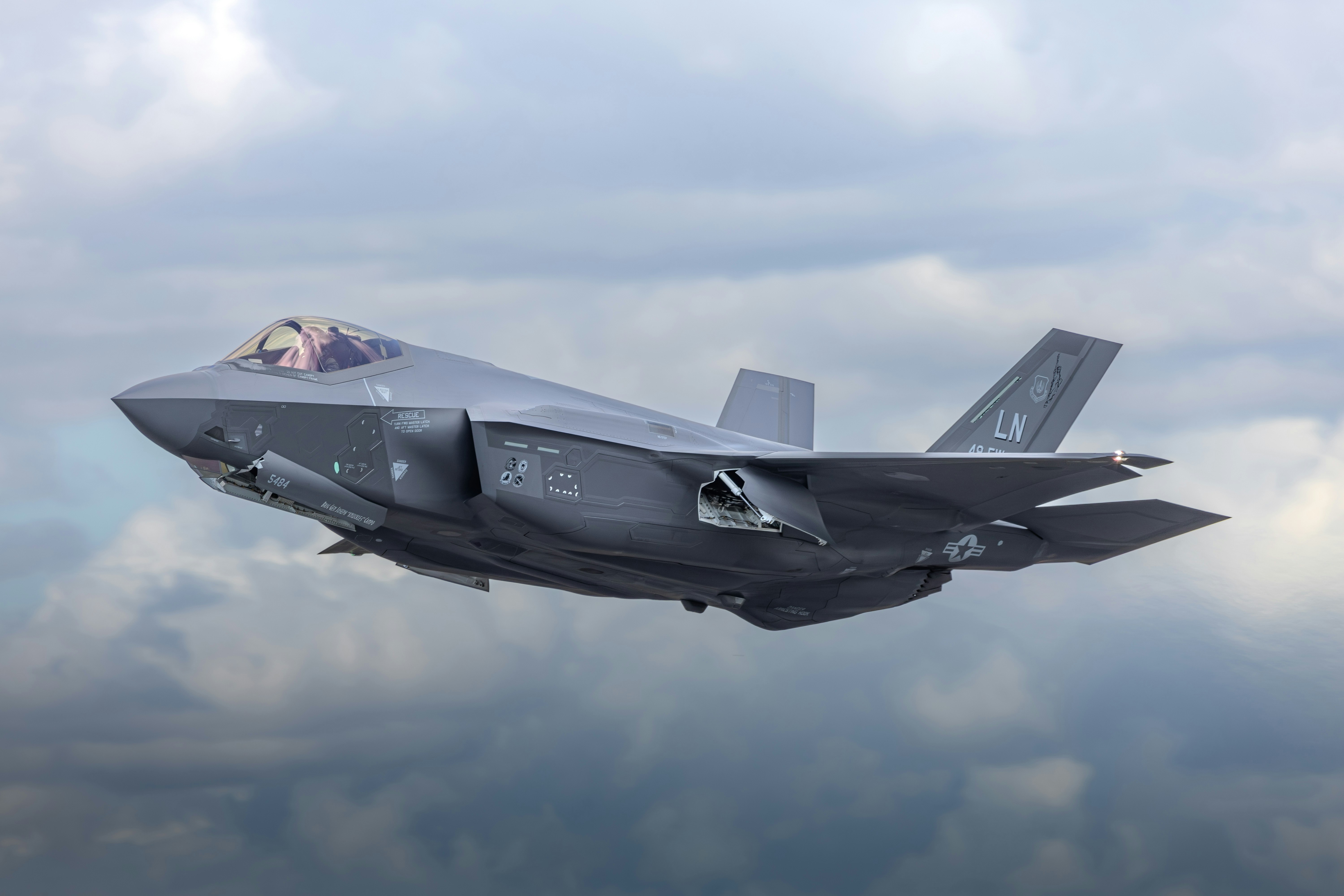
U.S. F-35 took off from the Royal International Air Tattoo, in April 24, 2024 (David Hili/Unsplash)
Harun al-Aswad in Paris
Saturday 17 May 2025 11.21 CEST
Countries relying on American weapons are reassessing their military strategies due to geopolitical uncertainties in US administrations and growing national security concerns.
US President Donald Trump has repeatedly expressed favourable views towards Russian President Vladimir Putin, and is pushing for a controversial deal to end the Russian-Ukrainian war. He also launched a trade war that strained ties with key US allies.
Consequently, Canada and Portugal are reviewing their contracts to purchase US fighter jets, while the UK Minister of State for Defence Procurement and Industry has called for deeper UK–France defence cooperation to provide stronger Nato leadership and deter further Russian aggression.
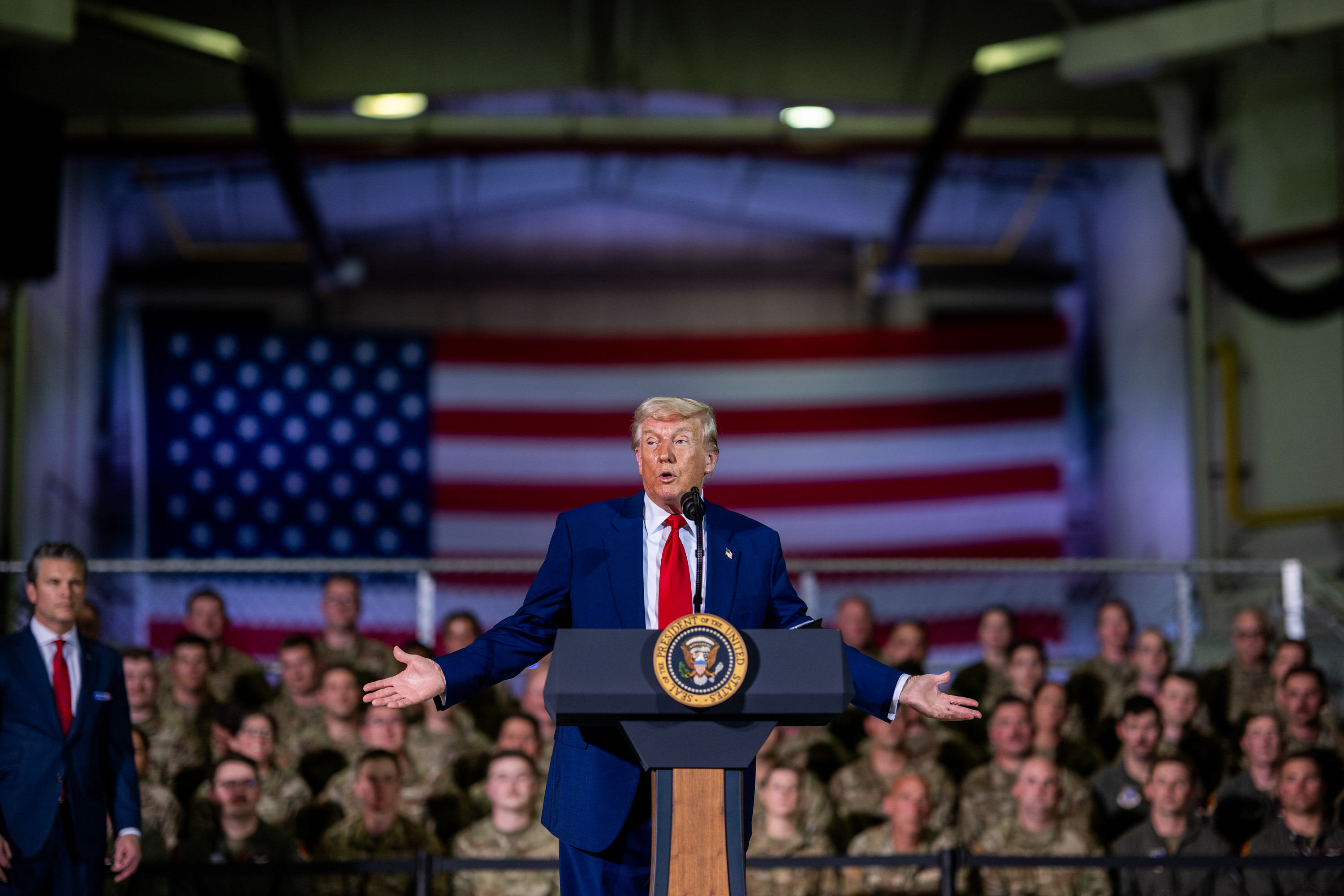
President Donald Trump greets base leadership and speaks at Selfridge Air National Guard Base in Harrison Township, Michigan, Tuesday, April 29, 2025 (Flickr).
Latvia has withdrawn from the 1999 Ottawa Convention banning anti-personnel landmines. Poland and three Baltic states, in a joint statement, said that rising military threats near Russia and Belarus justify reconsidering the treaty.
Strategic shift
Oz Katerji, a British–Lebanese conflict journalist based in Kyiv, said: “The Trump administration fails to understand Russia’s motivations for invading Ukraine.” He added that the US strategy and plans would be a “disaster for European security,” potentially encouraging further Russian invasions and dismantling the post–Second World War international order.
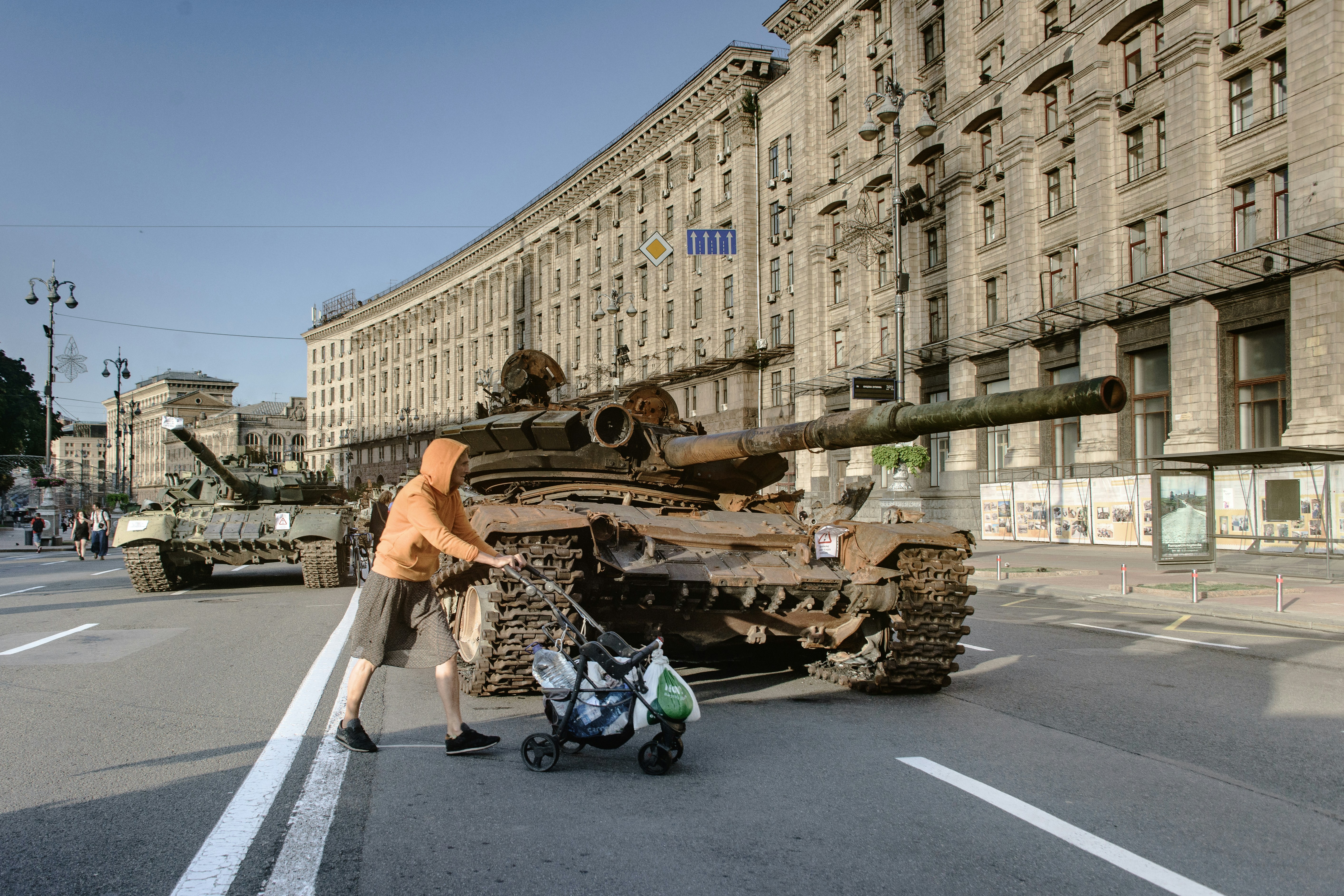
Parade of destroyed Russian military equipment in Kyiv, Ukraine, 2022. (Dmytro Tolokonov/Unsplash).
According to the UK-based International Institute for Strategic Studies, Russia has suffered heavy losses since 2022 and is turning to old Soviet stockpiles to rebuild. Western aid—especially from the US—has helped block Russia from regaining key military and industrial sites in Ukraine, many once central to the Soviet defence system.
Now, as Washington shifts focus to China, European leaders aim to conclude the war in a manner consistent with their national interests. German Chancellor Friedrich Merz has stressed backing for a stronger Nato presence in Eastern Europe amid doubts over Trump’s commitment to Ukraine.

France has held and hosted several international meetings to end the Ukraine–Russia war in a way that aligns with its national security interests. The Assemblée nationale in Paris by Harun al-Aswad, 17 May 2025
During talks in France, White House officials reportedly proposed placing the Russian-held Zaporizhzhia nuclear plant in southeastern Ukraine under US oversight. They also considered dropping support for Ukraine’s Nato bid and freezing the frontlines by formally recognising Russian control of occupied regions.
Strategic Uncertainty
The White House is pressuring allies to accept its strategy by signalling plans to withdraw or relocate troops and ammunition stationed in Europe since World War II — fuelling debate over the viability of relying on European weapons and nuclear alternatives, particularly in Germany.
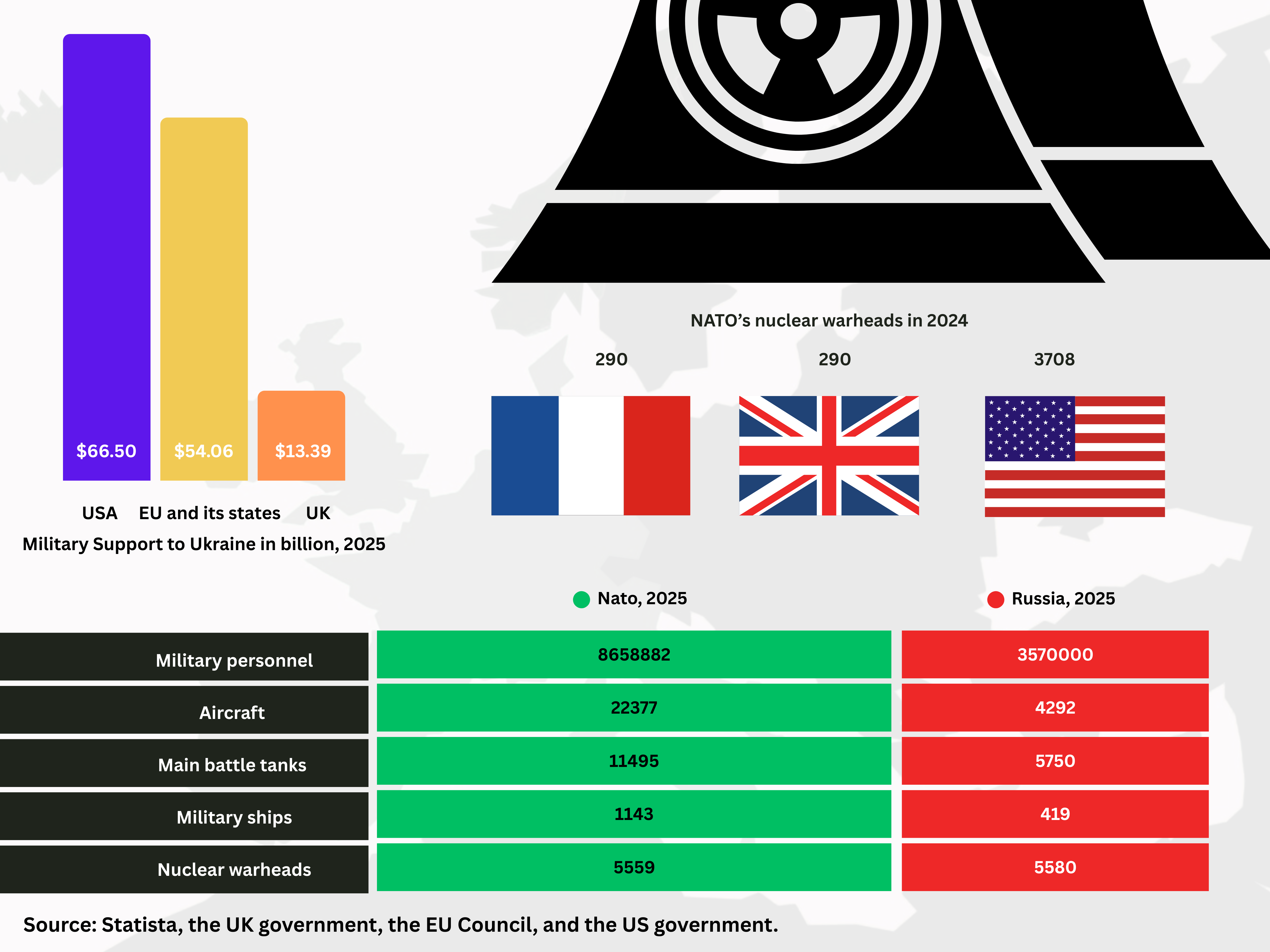
Military support from the US, EU states, and the UK to Ukraine since the beginning of the Russian invasion, alongside a comparison between NATO and Russian forces and nuclear warheads in 2025, including a comparison of nuclear warheads between France, the UK, and the US in 2024.
Gesine Weber, a France-based German research fellow at the German Marshall Fund of the United States, said the French and British nuclear arsenals are only about 10% the size of the US arsenal, making them “less deterrent”.
The expert in defence and security added that France’s nuclear doctrine relies on “strategic operational ambiguity”, which might not reassure European allies.
She also said: “The Germans have procured F-35 aircraft precisely to transport US nuclear weapons; therefore, it would probably be problematic to use this German system to transport a French nuclear warhead.”
Technical support from the European Union is legally prohibited in this case, as the Union’s treaties bar funding for military or defence-related expenditures. Defence projects must proceed through the Permanent Structured Cooperation framework.
Allegations of EU bureaucracy, along with arguments that the bloc needs to establish an independent military capability outside the Nato framework, contributed to fuelling Brexit.
Trump said the EU was formed “to screw the United States.”
Weber pointed out that Nato members have “relied heavily” on US logistics, intelligence, and refuelling capabilities. Even if advanced fighter jets were manufactured, she said: “Lacking US support would cripple operations.”
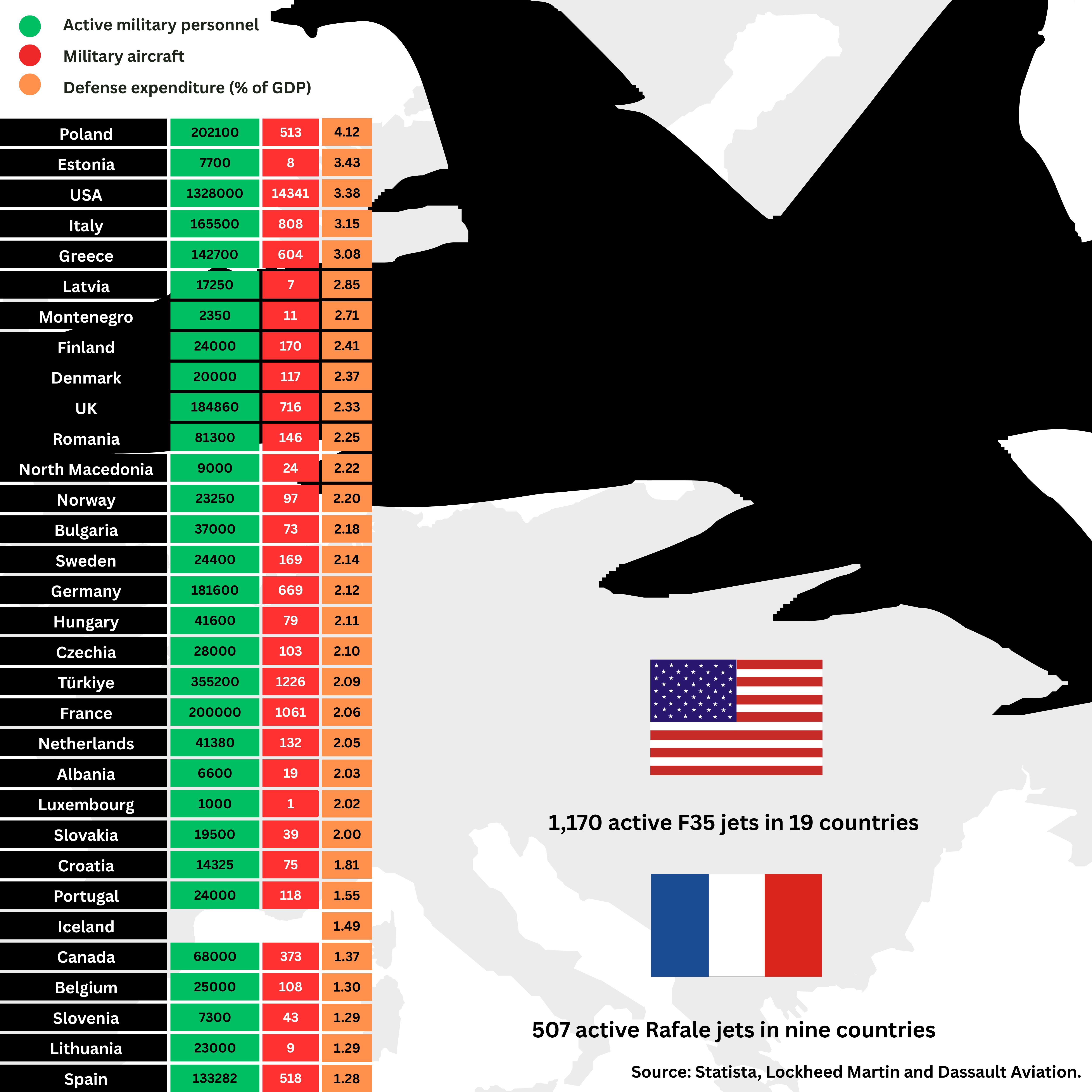
Comparison between NATO member states in terms of active military personnel, military aircraft, and defence expenditure, in addition to a comparison of the number and deployment of active F-35 and Rafale jets.
Canada’s Prime Minister, Mark Carney, announced that due to the country’s heavy reliance on US security, it is reviewing its 19 billion Canadian dollars (US$13 billion) contract for 88 US-made F-35 fighter jets.
Autonomy concerns
Nuno Melo, Portugal’s former Defence Minister, told a local newspaper that the US, once predictable, now poses risks by potentially limiting maintenance and operational components.
Weber noted that since the US develops the jet’s software, it could theoretically block updates or even disable aircraft remotely. She said: “It could also be the case that the US will not provide updates anymore for certain countries… That makes European suppliers quite attractive at the moment.”
The Pentagon said: “The programme operates under well-established agreements that ensure all F-35 operators have the necessary capabilities to sustain and operate their aircraft effectively. We remain committed to providing all users with the full functionality and support they require.”
The US, which once suspended related security assistance to Pakistan in 2018, is now investigating a possible violation of the end-user deal for F-16 jets—predecessors to the F-35—by Islamabad against India.
The F-35, the world’s most expensive jet, outperforms rivals with vertical take-off and landing. However, with a top speed of Mach 1.6, it is slower than the Mach 2 Eurofighter Typhoon — built by the UK, Germany, Italy, and Spain — and Sweden’s budget-friendly Saab Gripen E/F jet.
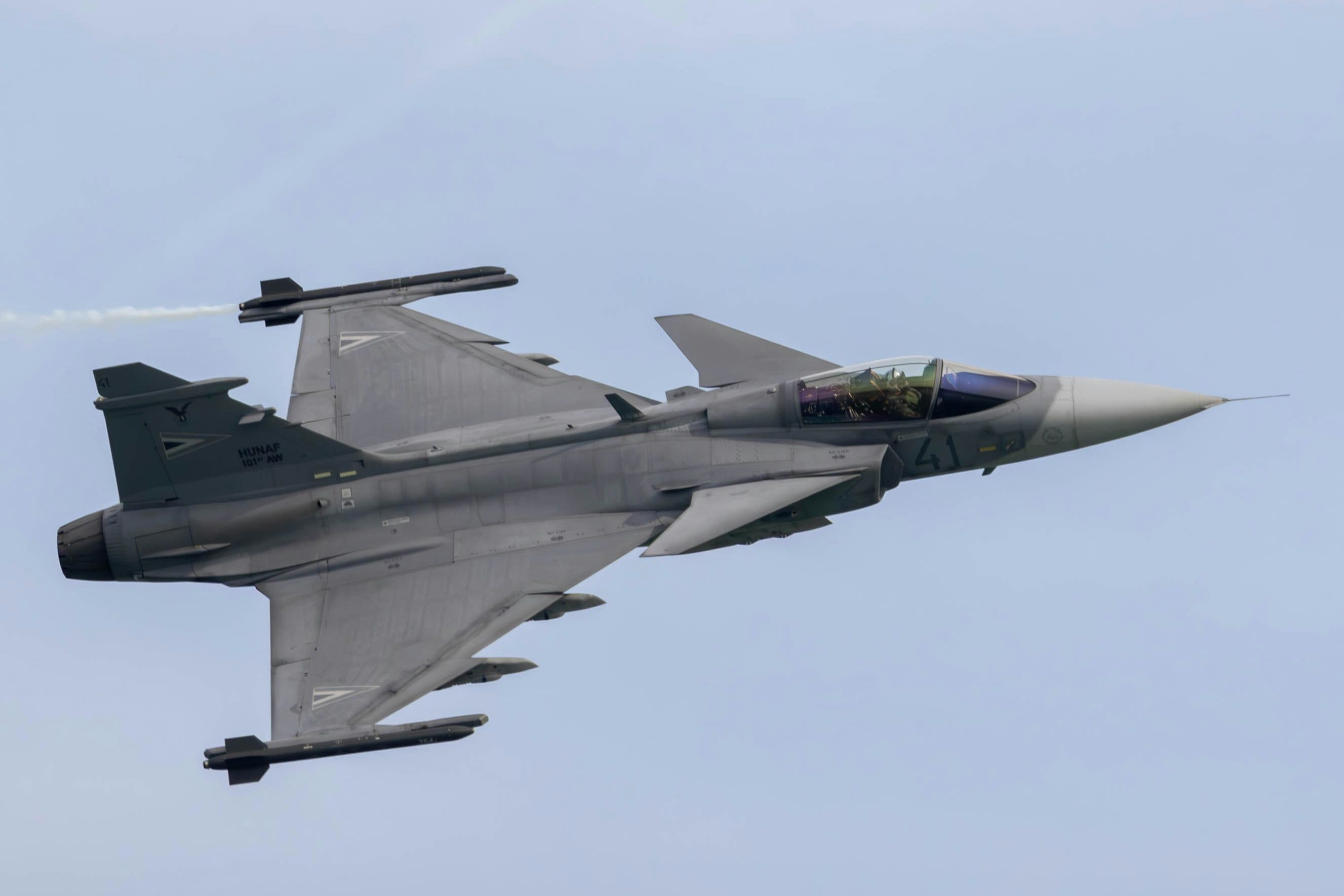
SAAB JAS 39 Gripen, a Swedish multi-role fighter jet designed for air defence, reconnaissance, and ground attack missions. This photo shows one of the jets operated by the Hungarian Air Force at an airshow in Caorle (Venice) on 4 May 2024. (Edoardo Bortoli/Unsplash)
France’s Rafale jet reaches Mach 1.8 and offers the highest payload at 9.5 tonnes and a combat radius of 1,850 km — nearly double that of the F-35A and significantly more than its European counterparts.
Scaling Up
French President Emmanuel Macron recently urged European nations to prioritise purchases of Rafale jets over F-35s and to opt for the French–Italian SAMP/T air defence system instead of the US Patriot system.
Despite being the world’s second-largest arms exporter, it is unclear whether France can competently meet future demand. Dassault Aviation, the Rafale’s manufacturer, did not respond to requests for comment.
According to the magazine L’Usine Nouvelle, Dassault is considering opening an assembly line in India, which has signed a contract for 26 jets. The company also has 164 Rafale orders for foreign countries.
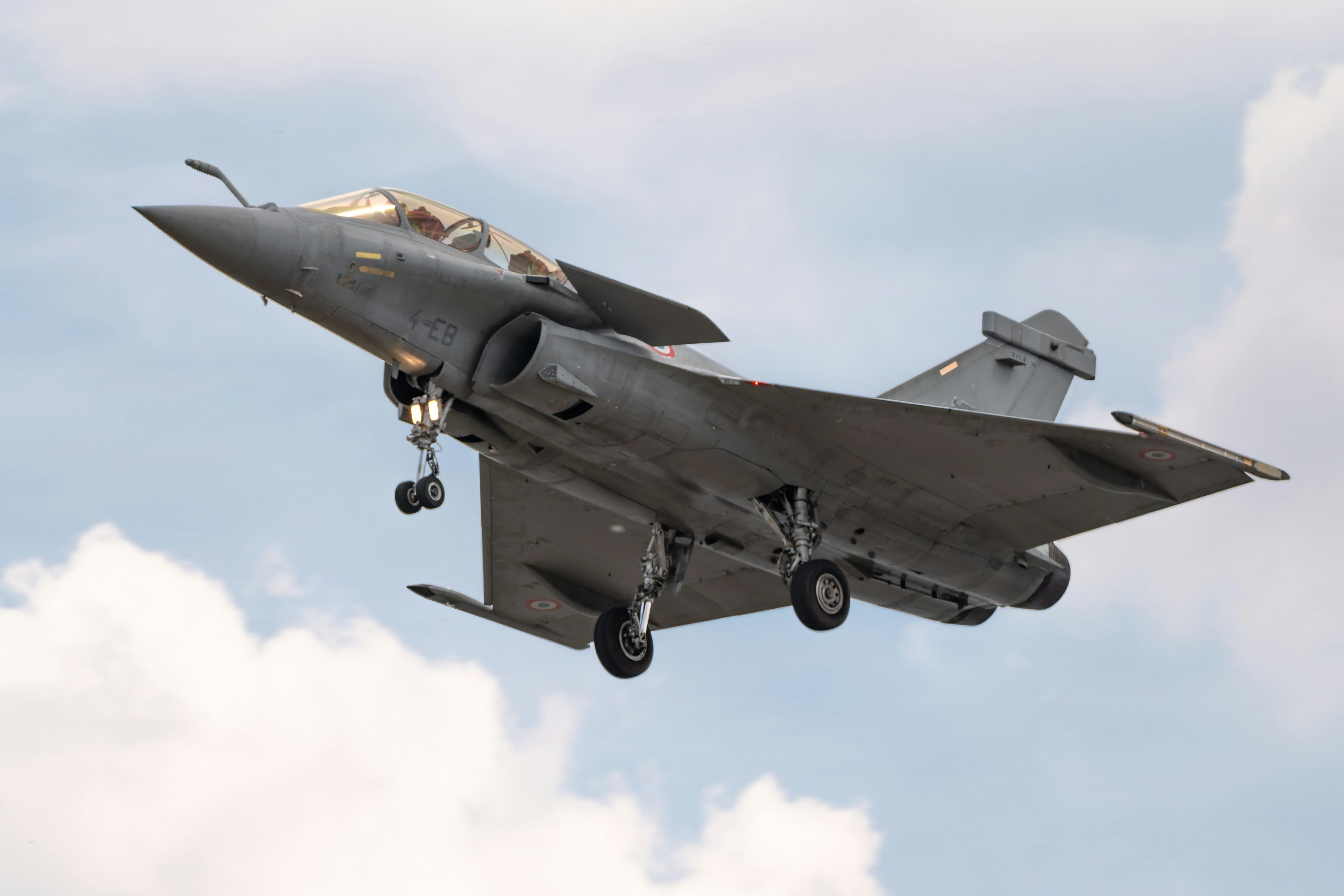
A French intelligence official told CNN authorities are investigating reports that Pakistan shot down multiple Indian Rafale jets with Chinese-made weapons during May’s tensions .Photo for the dassault Rafale jet in October 1, 2023 (Frédéric LE MONNIER/Unsplash)
The French Defence Ministry announced plans to boost Rafale production from 25 jets annually in 2025 to four or five jets per month by 2026. A new manufacturing facility north of Paris has already opened to support this expansion.
A foreign official at a Paris defence conference, speaking anonymously for security reasons, said France, Spain, and the UK are discussing cooperation on “new air defence technology,” with France pushing for greater European strategic autonomy and reduced reliance on US defence policy.
This article is available in French.
The story is an MA Journalism assignment for the University of Portsmouth, UK, written for a simulated submission aimed at The Guardian’s audience.